
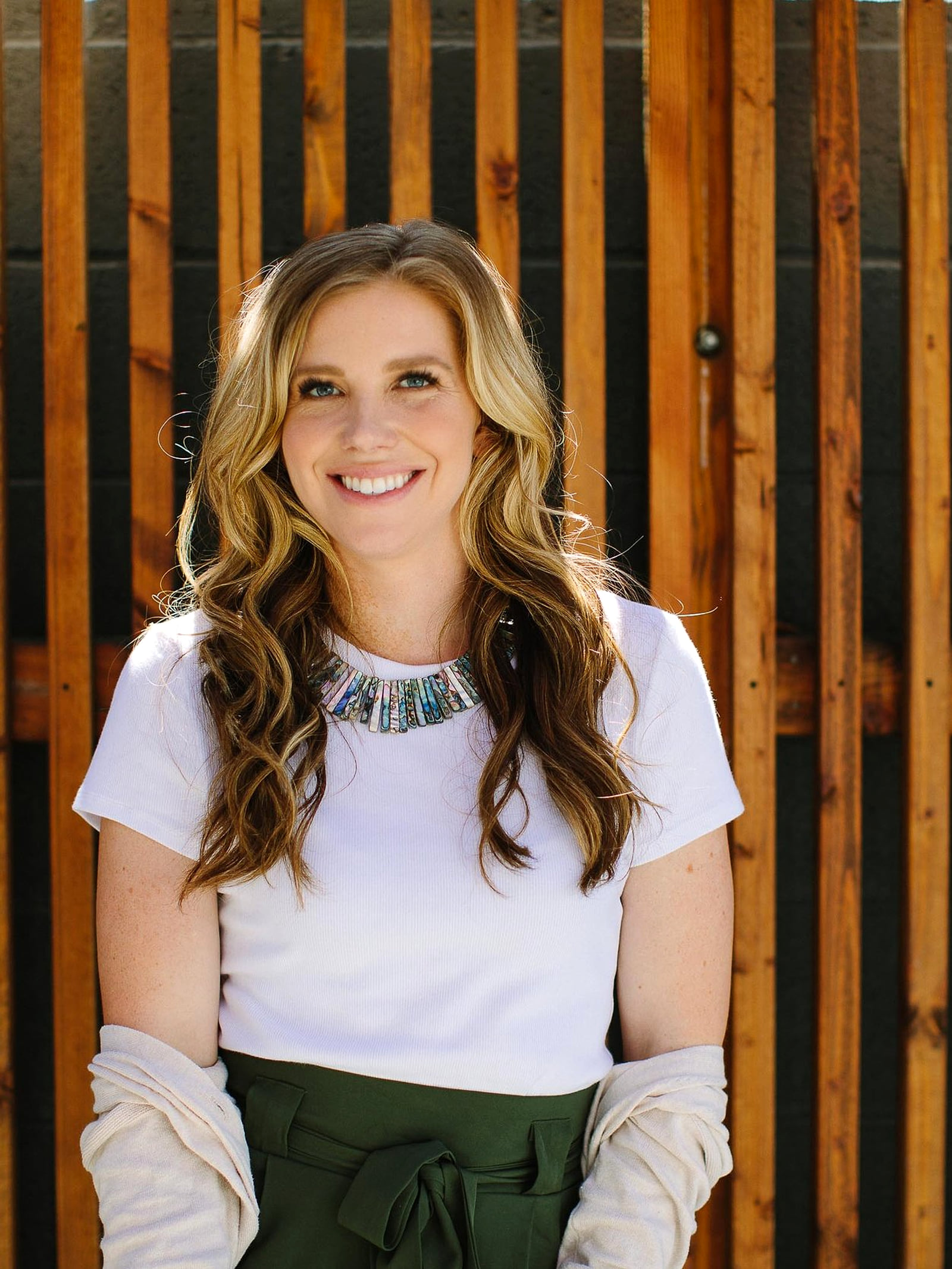
By Christina Mathieson, LMFT #115093, founder of My Mental Climb and a couples-and-sex-therapy-trained clinician.
TL;DR. Off Campus, the Prime Video adaptation of Elle Kennedy's hockey-romance series, became a BookTok phenomenon almost overnight. Beneath the fake-dating-to-lovers plot, the show is doing what good romance fiction often does, exposing the patterns people use to keep real intimacy at arm's length: fake labels, ghosting, hookup culture, masculine emotional shutdown. A therapist on what the show gets right about attachment and what real life makes harder than the season-finale version.
Off Campus dropped on Prime Video on May 13 and became a BookTok phenomenon within a week. The series, adapted from Elle Kennedy's college hockey romance books, runs a familiar Hannah-and-Garrett fake-dating-to-lovers plot, and Prime renewed it for a second season before the first one had even finished its premiere week. Whatever you think of the show on its own merits, the conversation it is fueling on TikTok is doing something interesting, and not because of the hockey.
A lot of the cultural energy around this show is about what it lets viewers see indirectly: the games people play in real dating, the avoidance dressed up as casualness, the way ghosting and undefined situationships have come to function as a default exit strategy in a culture that has not given people very good tools for emotional risk. The show is fiction, but the patterns it is playing with are not.
Why fake dating keeps coming back
None of this is new. Fake dating predates Off Campus by decades, and the broader story pattern of two guarded people letting each other in predates modern romance fiction by centuries. For Gen X and older millennials, the most beloved version is probably 10 Things I Hate About You (1999), where Heath Ledger's Patrick Verona is paid to date Julia Stiles's Kat Stratford, and the same dynamic plays out: the walls, his bad-boy reputation and her armored feminism, gradually fall as the fake premise gives both characters cover to risk being seen. The film itself is a modern updating of Shakespeare's The Taming of the Shrew, working with a story pattern that goes back further still. The setup keeps finding new audiences across decades because the relational need underneath it is not a generational one, and it is also not bound to a single relationship configuration.
The contemporary BookTok ecosystem makes that point in real time. Rachel Reid's Heated Rivalry, the long-running M/M hockey romance about two rival NHL stars in a secret years-long relationship, has been its own BookTok phenomenon for years and got its streaming adaptation in November 2025 on Crave and HBO Max, where it became the most-watched original series on Crave and was renewed for a second season set for spring 2027. Two of the most-discussed hockey romance properties on BookTok right now use different premises, fake dating in one and enemies-to-lovers rivalry in the other, and yet they run the same underlying dynamic: real intimacy hidden behind a structural reason it has to stay hidden, gradually surfacing as the structure becomes harder to maintain. What viewers are responding to is the slow uncovering, not the particular premise that allows it. The pattern works across gender, orientation, and relationship configuration, which is part of what makes this kind of story as portable as it is.
Fake dating works in fiction because it gives both partners cover for vulnerability they would not otherwise risk. Inside the fake structure, real feelings can show up with built-in deniability. We were only pretending, says the part of the brain that monitors for rejection, so if this lands wrong I can pull back. The structure lets people drop their guard incrementally and on a manageable timeline.
In real dating, the same kind of cover shows up everywhere, just with different labels. "We're just hanging out." "It's not serious." "I don't really do labels." These are not always avoidant moves, and sometimes they are honest about where two people actually are. But for many people, the undefined-on-purpose label is doing the same job the fake-dating plot does in the show: giving the system a buffer between the part of them that wants more and the part that is terrified of being seen wanting it.
What fake dating demonstrates is the same thing attachment researchers have been writing about for forty years. Vulnerability is a graduated process the nervous system can only sustain when the conditions feel safe enough. The setup is satisfying because it externalizes the conditions of safety into a plot device, and the audience gets to watch the cover fall away in two hours instead of two years. That is the fantasy, and the real timeline is longer.
Garrett, Hannah, and the patterns underneath
Without spoiling the series, the dynamic the show keeps returning to is the slow softening of a partner who has been protecting himself for a long time, while the other partner stays patient with the vulnerability that takes a while to surface. Romance readers know this dynamic by heart, and so do therapists. It is a clinical pattern dressed in a sports jersey.
The Garrett-coded character, the partner with emotional walls and a history that taught him to keep things contained, is doing what avoidant attachment looks like under pressure. Avoidant attachment is the coping strategy where closeness or emotional accountability triggers a pull-back, often before either partner notices the pull-back has happened. In fiction, the avoidant partner gradually lowers the walls because the plot demands it. In life, the lowering only happens when the avoidant person experiences enough safe, repeated moments of being met without judgment that their nervous system updates its expectation. That takes time, and it takes the partner staying around for the work, which is rarely as cinematic as the show makes it look.
The Hannah-coded character, the partner whose openness keeps creating room for the other person to grow into it, is doing something the show treats as romantic but is, clinically, an unfair amount of emotional labor when the other partner is not doing parallel work. The setup assumes the patient partner can wait without resentment building. Real people without the script's scaffolding tend to burn out before the avoidance shifts. The show works because the timeline is compressed and the writer is making both characters meet in the middle. Real relationships have to make their own scaffolding.
Why safety is the precondition for arousal and orgasm
One of the things the story keeps insisting on, sometimes more directly in the book series than in the adaptation, is that Garrett's patience around Hannah's sexual response is part of what eventually allows her body to respond at all. Hannah's character in Elle Kennedy's source novel is a survivor of sexual assault who, before the story begins, has already done significant work on her own and with a therapist to integrate what happened to her. Her storyline with Garrett involves him staying patient with the range of feelings she still carries, her slower responsiveness, and the way her body needs more time to feel safe before it can fully relax. Survivors carry many different emotions about what they have lived through, and Hannah is depicted with a real pride in the work she has done alongside the complexity that is still there. She is not a character defined by what was done to her. The story is dramatizing something the research has been showing for decades, which is that the body cannot fully arouse, and almost cannot orgasm, while the nervous system is in a threatened state.
The mechanism is well-mapped. Sexual response, particularly orgasm, requires a shift into parasympathetic dominance, the rest-and-digest state of the nervous system, which is also the state that depends on perceived safety to engage. Stephen Porges's polyvagal theory names this as ventral vagal engagement: the branch of the autonomic nervous system that activates when the body reads its environment as safe enough to drop the guard. Without that engagement, the body stays in a defensive posture, and arousal is muted or absent. Neuroimaging research on the brain during orgasm has consistently shown reduced activity in threat-detection regions, suggesting the system has to feel safe enough to release threat surveillance before full sexual response is possible.
For trauma survivors, the dynamic is documented across decades of research. Childhood sexual abuse and adult sexual trauma show consistent links in the literature to lower arousal, lower orgasm frequency, and higher rates of pain and avoidance, and recovery work is partly about helping the nervous system relearn that sexual context can be safe with the right partner and the right pacing. Birnbaum, Reis, Mikulincer, Gillath, and Orpaz (2006) extended this to attachment specifically, showing that felt safety with a partner predicts not just better sexual experiences but more reliable physical arousal and orgasm in committed relationships.
What Garrett's patience offers Hannah in the books, and what the show names openly in dialogue without putting the audience through a re-enactment of the event itself, is the relational condition the research describes: patience around the range of feelings she carries, no pressure on response timing, a consistent signal that her slower arousal is not a problem and her body's protective response is not a failure. Inside that condition her nervous system gradually updates its expectations, and what was inaccessible becomes available. The choice to address the trauma in dialogue without dramatizing it is itself trauma-informed craft on the part of series creator Louisa Levy, who consulted with sexual-assault experts about what most adaptations get wrong. The mechanism the show is illustrating is the same one trauma-informed sex therapy works with every week.
This is also worth saying clearly. Feeling safe enough for the body to respond does not require a committed relationship. The Dean-coded character in the Off Campus series, who genuinely thrives with casual encounters and is depicted as consent-aware and respectful inside them, is showing the other version of this. Safety can absolutely be present in a hookup, in an open or non-monogamous arrangement, in any sexual structure a person actively wants and engages on purpose. What matters is whether the conditions you actually need to feel comfortable, the kind of partner, the kind of communication, the kind of pacing, are present in the encounter you are in, regardless of the label on the arrangement. For some people those conditions require deep commitment; for others, they are clarity about what the encounter is, mutual respect, and a partner who pays attention to feedback in the moment. Both can be safe, and both let the nervous system drop the guard enough for genuine sexual response. The question is knowing your own conditions and looking for partners who can meet them, whatever the structure of the relationship looks like.
Ghosting, hookup culture, and the dating fatigue underneath the trend
A lot of the energy on BookTok around Off Campus has been framed as a reaction against app dating, the constant low-grade exhaustion of swiping, the rise of situationships, the normalization of ghosting as an exit strategy. The slow-burn fake-dating plot offers something modern dating largely does not: characters who choose each other on purpose, who say what they mean, who eventually risk being honest in a culture that increasingly treats honesty as a vulnerability to avoid.
Ghosting itself is worth examining clinically. For many people it functions as the default exit when emotional accountability feels harder than disappearing, though it does not always signal avoidant attachment. For some, ghosting is a one-time response to overwhelm. For others, it is the move that gets repeated across many relationships, and the repetition usually traces back to early experiences where emotional honesty did not feel safe. Either way, ghosting is a learned move, and learned moves can be unlearned.
The show plays with this directly. Garrett has a scene where he calls ghosting a moral failure, and then, when Hannah catches the interest of another guy, his first instinct is to advise her to ghost him. The script knows exactly what it is doing. What we say we believe about ghosting and what the nervous system reaches for under pressure are often very different, and noticing that gap is usually where change starts in therapy.
Hookup culture, similarly, interacts with attachment patterns rather than causing them. For people with secure attachment, casual sex can be a clear choice that doesn't affect their capacity for connection. For people whose attachment system is more activated, or more avoidant, hookup culture amplifies whatever pattern is already there. More rumination after, more ghosting, more confusion about what either person actually wants. (For a clinician's longer take on heartbreak's effect on the nervous system, see Why Heartbreak Feels Physical.)
The show, intentionally or not, is offering its viewers a corrective fantasy: imagine if it were slower, if people stayed, if the vulnerability paid off. The longing the show is meeting is real, and it predates the show by a long time.
What the show gets right
The way the show creates room for vulnerability. The way it puts friendship before passion for this couple, because of what Hannah's body needs in order to feel safe enough. The slow build of trust over many small moments instead of one big declaration. The truth that the partner with more walls is working from an older script that the right conditions can update, not a smaller capacity for love. What feels like romance-novel convention is often clinical reality the show happens to dramatize cleanly. The friendship-first sequence the show chooses for Hannah and Garrett fits what each of them is specifically working with, and it is not meant as a universal rule for every couple.
The show also gets something right that contemporary dating culture often does not: there is a difference between casual and careless. Casual sex with mutual clarity about what it is, is a different thing than ghosting the next morning. Honest communication about what each person wants, even when the answer is not very much for very long, is a skill, and the show keeps insisting that the characters develop it.
What it gets wrong, and why that matters
The compressed timeline. The way romance fiction collapses what takes years in real attachment work into a few episodes. The implication that one good partner can love the other partner's wounds out of them, which is a beautiful idea and often a setup for burnout in real relationships. The way the friendship layer is depicted as already in place rather than as something the couple has to build on purpose.
None of these are reasons not to watch the show. They are reasons to notice the gap between fictional romance and what it actually takes to become someone who can stay in a relationship over time, especially if you have noticed yourself doing some version of the patterns the show is dramatizing.
When to bring this to a therapist
If something about Off Campus is hitting harder than you expected, that is usually data worth taking seriously. Some signals:
- You recognize yourself in the avoidant character and have a pattern of pulling back when relationships get real
- You recognize yourself in the patient partner and are tired of waiting for someone whose work is not being done
- Ghosting (yours or other people's) keeps being the default in your dating life
- Hookup culture has started to feel less like freedom and more like a hamster wheel
- You are grieving that the slow-burn version of romance does not seem available in the world you actually live in
Adult attachment patterns are not fixed. The research on what attachment theorists call earned security shows that adults with insecure starting points can develop secure attachment patterns later in life, often through corrective relational experiences with a partner, a therapist, or both. Roisman, Padrón, Sroufe, and Egeland (2002) documented this empirically in a longitudinal sample, finding that adults who developed secure attachment despite insecure early caregiving showed relationship functioning comparable to continuously-secure adults. Mikulincer and Shaver's broader body of work on security-priming has shown that even brief reminders of secure attachment can shift functioning toward more secure patterns, and that long-term exposure to a partner who functions as a secure base is one of the more reliable routes to lasting change. The same dynamics the show is playing with, the gradual softening, the friendship layer, the slow build of trust, can be examined and changed in individual therapy and, where partners are willing, in couples therapy. Real change takes time, and the direction is genuinely workable.
A closing note
Trending fiction rarely makes people change, though it sometimes makes them notice. If Off Campus is making you notice something about your own dating patterns, attachment style, or the kind of relationship you are longing for and not quite reaching, that is worth a conversation with somebody trained to help with it.
I'm Christina Mathieson, LMFT #115093, founder of My Mental Climb, with a team of clinicians who work with attachment, dating, and the patterns underneath modern romance. If anything in this resonates, a free 15-minute consult with our intake coordinator is a no-pressure place to start. We work via secure telehealth across California.
Related from My Mental Climb: What Ted Lasso and Shrinking Got Right About Therapy · Why Heartbreak Feels Physical: The Brain Science of Romantic Loss · Responsive vs Spontaneous Desire · Individual therapy
Further reading: Hazan & Shaver (1987), Romantic love conceptualized as an attachment process, Journal of Personality and Social Psychology · Roisman, Padrón, Sroufe, & Egeland (2002), Earned-secure attachment status in retrospect and prospect, Child Development · Birnbaum, Reis, Mikulincer, Gillath, & Orpaz (2006), When sex is more than just sex: Attachment orientations, sexual experience, and relationship quality, Journal of Personality and Social Psychology · Stephen Porges, The Polyvagal Theory: Neurophysiological Foundations of Emotions, Attachment, Communication, and Self-Regulation (W. W. Norton) · Garcia et al. (2012), Sexual hookup culture: A review, Review of General Psychology · Mikulincer & Shaver (2018), Attachment orientations and emotion regulation, Current Opinion in Psychology · Emily Nagoski on context and desire
Common questions
- Why is fake dating such a popular premise in romance fiction?
- Fake dating works in fiction because it gives both partners cover for vulnerability they would not otherwise risk. Inside the fake structure, real feelings can emerge with built-in deniability. That same dynamic shows up in real dating, where people use casual labels, situationships, and undefined arrangements to protect themselves from the rejection of being honest about wanting more. The setup is so satisfying in stories because it lets the audience watch the cover fall away on a predictable timeline, which is rarely how it works in life.
- Is ghosting a symptom of avoidant attachment?
- Often, though not always. Avoidant attachment is a coping pattern where closeness or emotional accountability triggers a pull-back, and ghosting is one of the easier ways to act on that pull. For some people, ghosting is a one-time response to overwhelm. For others, it is the default exit strategy across many relationships, and that pattern usually traces back to early experiences where emotional honesty did not feel safe. Either way, ghosting is a learned move that can be unlearned with attention.
- Does hookup culture cause attachment problems?
- Hookup culture doesn't cause attachment patterns; it interacts with them. For people with secure attachment, casual sex can be a clear choice that does not affect their capacity for connection. For people whose attachment system is more activated or more avoidant, hookup culture tends to amplify whatever pattern is already there: more rumination, more ghosting, more confusion about what either person actually wants. The pattern was usually there before the hookups; the structure just makes it louder.
- Why do shows like Off Campus appeal so much to Gen Z?
- A lot of younger viewers are tired of app-based dating, situationships, and the ambient cynicism of contemporary romance. Slow-burn fiction with characters who choose each other on purpose is a counter to that fatigue. What viewers are longing for is relational repair that feels possible, not nostalgia for an earlier era. The slow build, the friendship layer, and vulnerability that takes time to surface are the parts that ring real, even inside a fantasy.
- Can the dating patterns shown in Off Campus actually be changed in real life?
- Yes, with attention. Adult attachment patterns are not fixed, and the same dynamics that play out in fictional fake-dating plots, avoidance, vulnerability, the gradual building of trust, are also the substance of individual and couples therapy. Real change takes time, but the direction of the work is genuinely workable. Most people who decide to look at their dating patterns make meaningful progress over months, not years.
Tagged
Last clinically reviewed: by Christina Mathieson, LMFT #115093.