
For LGBTQ+ clients who don't want to be the explainer
LGBTQ+ therapy where the context is already held.
Reviewed by Christina Mathieson, LMFT #115093 · June 2026
California telehealth for LGBTQ+ adults working on any clinical concern, with a team who hold the queer context already so you don't have to teach it. We treat the full range, anxiety, depression, ADHD, trauma, relationship work in any structure, sex therapy, identity exploration, without making your identity the problem we're solving. Specific entry points for clients whose work includes family-of-origin tension, religious deconstruction, internalized stigma, or non-monogamy and kink-affirming care. Three California clinicians, telehealth, free 15-min consult.
If this sounds like you
- You're working on anxiety, depression, ADHD, trauma, or any clinical concern you'd see in any practice, and you want a therapist who already holds the queer context
- Couples work in any structure (queer, ENM, polyamorous, kink-involved, monogamous) and you want a therapist who treats your structure as the norm
- Sex therapy in a queer-affirming context, not couched in heteronormative defaults
TL;DR
LGBTQ+ therapy with three California clinicians who hold the queer context already, so you can focus on what you actually came in for, whether that's anxiety or depression, a relationship at a crossroads, sex therapy, ADHD, trauma work, or identity-specific territory like family-of-origin tension, religious deconstruction, or non-monogamy and kink. Christina Mathieson holds AAMFT LGBT-Affirmative Therapy certification and integrates sex therapy (Buehler-trained) with identity work. Michelle Cortez leads ENM, polyamory, and kink-affirming individual and couples work. Jalyse Stewart leads trauma-focused work for queer, BIPOC, and neurodivergent clients.
Good fit if
- You're working on anxiety, depression, ADHD, trauma, or any clinical concern you'd see in any practice, and you want a therapist who already holds the queer context
- Couples work in any structure (queer, ENM, polyamorous, kink-involved, monogamous) and you want a therapist who treats your structure as the norm
- Sex therapy in a queer-affirming context, not couched in heteronormative defaults
- You've been to therapy that said it was affirming and wasn't
- Family of origin, religious deconstruction, or minority stress is where the work needs to go and you want a clinician who already has the framework
- You're exploring gender and want supportive non-directive work, no outcome agenda
Not a fit if
- You're seeking 'conversion' or change-directed therapy, we don't provide that and never will
- You need specialized gender-affirming care letters (top surgery, HRT), we may not be the right fit; we'll refer
- You want a therapist who shares your exact lived experience (specific race, gender, generation, or community history), our team may not be that specific match and we'll happily refer to colleagues who are
Not sure which column you're in? Book a free consult. If we're not the right fit, we'll help you find someone who is.
What the work looks like
How we actually work together.
This isn't a different modality, it's a different starting point. We use the same evidence-based frameworks as any therapy (CBT, Gottman, EFT, EMDR, IFS), but you won't spend the first six sessions defining basic terms, justifying why misgendering from family still hurts even when you're years out, or explaining the tension of loving a faith tradition that doesn't love you back. The broad context is held; the specifics, your particular intersection, your particular community, what's true for you and not the next person, are what we stay curious about. (For more on what 'affirming' actually means in practice, and why it's different from just being 'safe', see our piece on What 'Affirming' Actually Means in LGBTQ+ Therapy.)
For couples and relationship structures of any size: we treat the structure you're practicing as the working structure. No pressure to reorganize into monogamy, no pressure to 'pick one' partner. The work is communication, attachment, and clarity, whatever the container is.
Our clinicians hold LGBT-Affirmative Therapy certification (AAMFT), and we're committed to keeping current on best practices for LGBTQ+ clinical care, which changes as the field evolves.
Modalities we draw from
 You've probably already had the wrong therapy experience
Most LGBTQ+ adults we see in the consult have a story about a previous therapist. The therapist who said 'I work with everyone' and then froze when you mentioned your boyfriend, or your partner who uses they/them, or the fact that there's more than one partner. The therapist who used your pronouns correctly but couldn't follow when you tried to explain why a family text last week felt like a small earthquake. The therapist who treated your coming-out story as the only story, when what you actually needed help with was a job change, a creative block, a fight with your sister.
The frustration you might already be carrying into this consult is: 'I want a therapist who isn't going to make me their education.' That's the line we hold ourselves to. The broad context is already held when you walk in: queer family-of-origin dynamics, the years-long arc of coming out, why misgendering still hurts even when you're out and settled, what it costs to choose between living authentically and keeping people in your life who can't quite hold both. The specifics, your particular configuration, your particular community, what's true for you and not the next person, are where the curiosity goes.
What 'affirming' actually means, and why most therapists who claim it aren't
Almost every therapist directory in 2026 lists hundreds of clinicians as 'LGBTQ+ affirming.' The label has expanded so widely that it's lost most of its useful meaning. The clinical distinction we'd draw is between tolerant therapy (the therapist won't moralize about your identity), welcoming therapy (the therapist supports the work and uses your pronouns), and affirming therapy (the therapist has done substantive training in the specific clinical and cultural concerns of LGBTQ+ populations and brings that training into the work). All three are better than non-affirming care, but they're not the same.
What substantive training looks like, in practice: formal coursework or certification (the AAMFT LGBT-Affirmative Therapy certification, which I (Christina) hold), ongoing continuing education in this clinical area, supervised practice with LGBTQ+ clients, and active engagement with the specific clinical literature (which is more mature than many clinicians realize and continues to evolve).
What affirming care isn't: it isn't the therapist becoming an expert on your specific identity who can speak for it. It's the therapist holding the broader clinical context (so you don't have to teach the basics) while staying genuinely curious about the specifics of your particular life, your particular community, and your particular experience. Affirming care is a stance, not a credentialed identity. (For more on this distinction, see our blog piece on What 'Affirming' Actually Means in LGBTQ+ Therapy.)
California specifically has the strongest legal protections in the U.S. for affirming care. SB 1172 (2012) made conversion therapy on minors illegal, and subsequent legislation has expanded those protections. Our practice has always been affirming-only and always will be. We list 'conversion therapy' as a not-a-fit on this page because it's important to be explicit about it, even though the question almost never comes up.
What we work on with LGBTQ+ clients (and most of it isn't your identity)
The clinical concerns LGBTQ+ clients bring into therapy are largely the same as what any client brings: anxiety, depression, trauma, ADHD, relationship patterns, sex therapy concerns, career transitions, parenting, grief, life-stage shifts. We treat the full range with the same evidence-based modalities we'd use in any therapy (CBT, ACT, EMDR, IFS, EFT, Gottman). The affirming part is structural rather than topical: the context is already held when you walk in.
Many of our LGBTQ+ clients come for work that has nothing structurally to do with their identity: an anxiety presentation rooted in perfectionism, a couples therapy case with a communication pattern that would look identical in a straight relationship, ADHD that's been undiagnosed for two decades, a grief process around a parent's death, a career identity crisis at 40. Identity isn't the problem we're treating. The therapy is the same therapy you'd get anywhere. The affirming context just means you don't spend the first three sessions explaining your life.
Where the work IS identity-specific, the territory falls into a few clusters. The next three sections cover those.
Couples, family planning, and what's specifically LGBTQ+ about LGBTQ+ relationships
Couples therapy is a substantial part of our practice, and many of the LGBTQ+ couples we see come in for work that would look structurally identical in any therapy room: communication patterns, conflict cycles, intimacy that has dropped off, parenting tension, financial stress, life-stage transitions. We use the same evidence-based modalities (Gottman, EFT, attachment-based work, sex therapy when intimacy is part of the picture).
Where the work IS specifically LGBTQ+ in nature, the clinical literature (including a 2020 PMC review on LGBTQ+ couples therapy) identifies several territories worth covering in their own right.
Discordant outness. When one partner is more out than the other, the more-out partner often experiences the asymmetry as a hurt that maps onto previously overcome internalized shame. The less-out partner is usually navigating real safety, family, or workplace constraints, not avoidance. Both are valid. Couples therapy work here is mostly about helping each partner stay grounded in what's true for them without using their partner's pace as evidence of love or its absence.
Sex therapy and the misattribution problem. Many LGBTQ+ couples who come in for sexual difficulties have assumed those difficulties are about their identity or relationship structure. Most of the time that's not the actual mechanism. Sexual difficulties in queer couples are usually the same patterns we'd see in any couple (mismatched desire, the responsive-vs-spontaneous gap, post-baby drop-off, the way long-term commitment reshapes the brake-accelerator balance gradually), with the additional layer that the cultural script for queer sex is thinner and many clients are improvising. Mainstream sex education rarely covered queer sex, safer-sex practices, or the specific anatomical and relational realities of same-sex intimacy, so a lot of LGBTQ+ adults come to sex therapy filling in literacy gaps that were never closed. Sex therapy in this practice (Christina Mathieson, LMFT #115093, is Buehler-trained) treats the relational and sexual layers together rather than splitting them.
Family planning and how queer families form. Surrogacy, donor selection, IUI/IVF decisions, adoption, fostering, custody arrangements after a former straight partnership, and the genetic-contribution conversations that have no clean answer all sit in couples therapy territory. These conversations have specific weight for queer couples because the path is rarely the cultural default and partners often disagree about which path fits. The work is helping the disagreement get addressed without it collapsing the relationship.
Couples in transition. When one partner transitions genders during the relationship, both partners face genuine reorganization: of sexual identity, of family-of-origin negotiations, of the relationship's external story. The clinical work centers on letting each partner's experience exist without one being subordinate to the other.
Delayed relationship development. Many LGBTQ+ adults entered serious partnership later than the cultural script expected, often because the cultural script didn't include them. The attachment and commitment skills that get built in adolescent and young-adult relationships sometimes show up needing to be built later, in the partnerships themselves. What surfaces is a different timeline, not a deficit.
Gender roles, division of labor, and income disparity. Same-sex couples don't have the default heteronormative role-divisions to fall back on. That's often a benefit (more choice) and sometimes a burden (everything has to be negotiated explicitly). When one partner earns significantly more or has more cultural masculinity capital, the resulting power dynamic often surfaces internalized messaging about gender and worth that's worth working through directly.
Gender exploration, dysphoria, and the support that fits each. Some clients come to therapy clear about their gender identity and need ongoing support for the day-to-day reality of living it. Others are in active exploration, where the goal isn't reaching a conclusion but having room to look without pressure. Some are managing gender dysphoria, the persistent distress between body and self-experience, which can range from mild and intermittent to severe. We don't write specialized gender-affirming care letters for HRT or surgery (we refer for those), but we hold the broader therapeutic work alongside whatever medical care you're navigating.
Clinicians on our team who lead this work: Christina Mathieson, LMFT #115093 for sex therapy and identity-integration in couples; Michelle Cortez, AMFT #146795 (supervised by Christina) for ENM, polyamory, and kink-affirming couples and individual work; Jalyse Stewart, AMFT #153712 (supervised by Christina) for trauma-informed couples work when one or both partners are carrying trauma that's surfacing in the relationship.
When family of origin, religious deconstruction, stigma, or concealment is the work
Many LGBTQ+ clients come to therapy for clinical concerns that aren't centrally about identity. For some clients, though, the foreground work is specifically identity-territory: family of origin, religious deconstruction, internalized stigma, or the chronic exhaustion of managing visibility across contexts. Each of these has its own clinical contours.
Family of origin and ambiguous half-acceptance. Family-of-origin work for LGBTQ+ adults often centers on a specific kind of grief: family members who are technically still in your life but no longer relating to who you actually are. The Thanksgiving dinner where everyone stops talking when your partner is mentioned. The mother who calls regularly but never asks about your spouse. The sibling who uses your pronouns in person and the wrong ones behind your back. This kind of ambiguous half-relationship is often harder to grieve than clean rejection, because there is no clear loss to grieve, just slow erosion.
Religious deconstruction. For clients raised in faith traditions that did not affirm their identity, the work is rarely 'leave or stay' framed simply. It's the slower work of figuring out what was theology, what was culture, what was family, what was actually meaningful to you, and what you want to carry forward, drop, or rebuild on different terms. We don't have an outcome agenda. Whatever your relationship to faith ends up looking like is the one we work with.
Internalized stigma as the underneath layer. When a presenting anxiety or depression has an underneath layer of internalized stigma (the absorbed weight of decades of cultural messaging that your identity is something to manage, justify, or hide), the surface concern often does not fully resolve until that layer gets attention. Internalized stigma surfaces as the inner critic who is harshest about the specific aspects of your identity, the part that flinches at PDA in public, the part that monitors how queer you look on Zoom for work. Recognizing it as internalized stigma rather than as personality is part of what lets it loosen.
Concealment fatigue. The chronic exhaustion of constantly calibrating how out you are in any given context. Work is one calibration, family is another, your dentist is a third, your kid's school is a fourth. Each context requires real-time judgment about pronoun introductions, family photos visible behind you on Zoom, whether to correct a misgendering or let it go. This vigilance has a real metabolic cost, and the depression and anxiety presentations downstream of years of this kind of background calibration are often misread as 'regular' depression and anxiety rather than as the predictable cost of the calibration itself.
Clinicians on our team who lead this work: Christina Mathieson, LMFT #115093 for the identity-integration and meaning-making layers, Jalyse Stewart, AMFT #153712 (supervised by Christina) for the trauma layer that often sits underneath family rejection and identity-based stress (especially for queer, BIPOC, and neurodivergent clients), and Michelle Cortez, AMFT #146795 (supervised by Christina) for the relational and structural layers when family-of-origin material surfaces inside a partnership.
Kink, BDSM, and fetish-affirming clinical care
Kink-affirming therapy is a smaller specialty within affirming care. The distinction we'd draw is between tolerant (the therapist won't pathologize you for your kink interests), welcoming (the therapist won't ask you to stop), and affirming (the therapist understands the structures of negotiation, aftercare, scene dynamics, and power exchange in long-term relationships well enough to work with them clinically when they show up in the room).
What we work on clinically with kink-identified clients: the integration of kink with the rest of life, the management of negotiation and consent in dynamic relationships, the working through of internal shame that often shows up after a lifetime of cultural pathologizing, and the specific relationship dynamics that come up in 24/7 power-exchange relationships or long-term D/s structures. We also work with the clinical concerns that might overlap with but aren't caused by kink: anxiety, depression, trauma, relational patterns. Kink isn't the problem we're treating; it's the context the work happens within.
Christina Mathieson, LMFT #115093 and Michelle Cortez, AMFT #146795 (supervised by Christina) are the two clinicians on our team who work most extensively with kink-identified clients. Christina holds Comprehensive Sexology certification through the Buehler Institute and integrates kink-affirming care into her broader sex therapy practice. Michelle's practice has a particular focus on ENM, kink, BDSM, and fetish-affirming care for individuals and couples. Either is a strong fit; the right match depends on your specific concerns and which clinical frame fits best, which we sort out in the consult.
What we don't do: we don't try to redirect clients away from kink, we don't treat kink as a symptom of trauma (sometimes it correlates with trauma history; often it doesn't), and we don't require disclosure of kink interests in therapy that's about something else. Many clients have been to therapists where their kink came up once and the rest of the work got distracted by it. We try not to be that.

Wondering if we're the right fit for what you're working on?
Free 15-minute call. We'll figure out together if we're the right starting point.
Book a Free ConsultWondering about cost? See what therapy costs in California.
Who on our team does this work
3 therapists who specialize here.
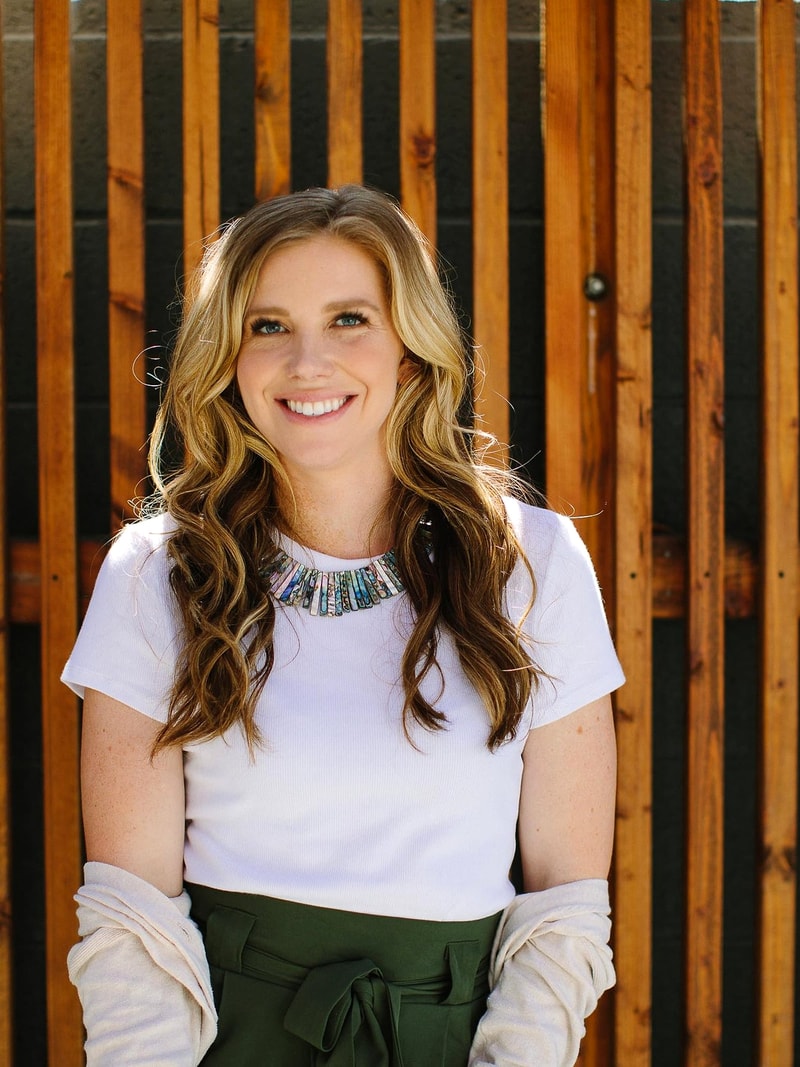
Christina Mathieson
Licensed Marriage and Family Therapist (LMFT) #115093
Human sexuality, couples work, ADHD and neurodiversity-affirming therapy, and affirming care for individuals navigating relationships, identity, and life transitions.

Michelle Cortez
Registered Associate Marriage and Family Therapist (AMFT) #146795
Supervised by Christina Mathieson, LMFT #115093
If therapy has felt too slow or too surface-level, that is exactly what I work against. Couples stuck in attachment patterns, anxiety and OCD, and neurodivergent clients who need structure and real feedback.
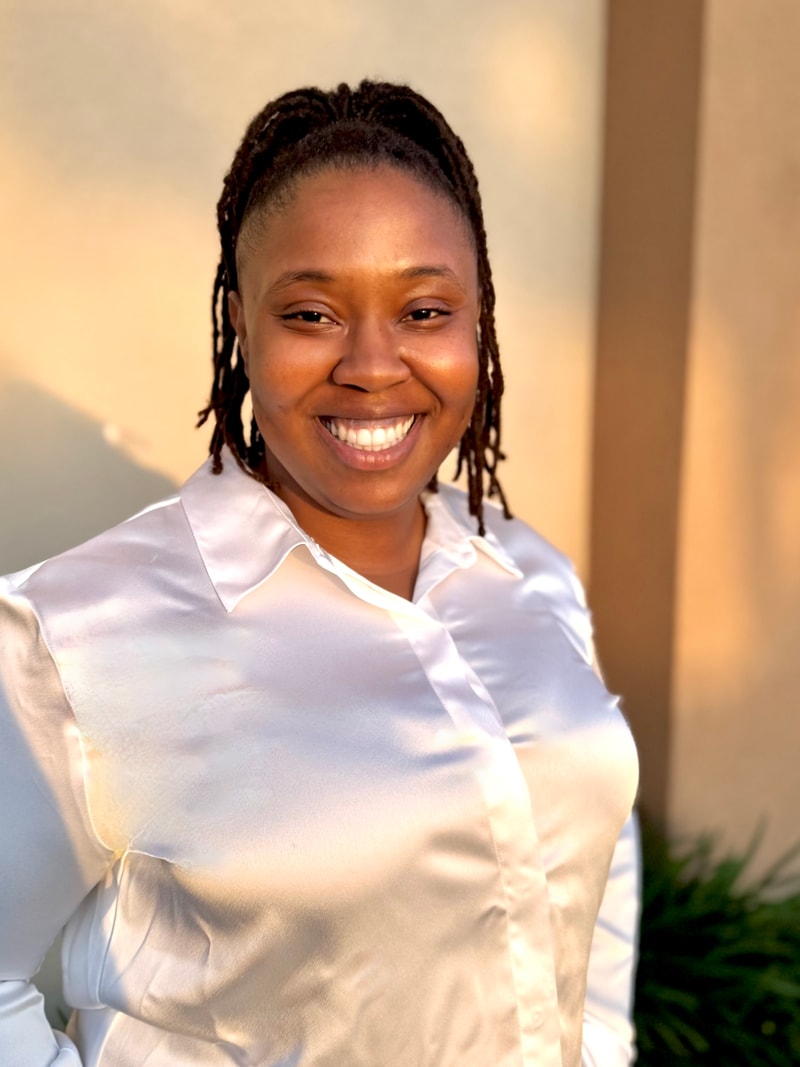
Jalyse Stewart
Registered Associate Marriage and Family Therapist (AMFT) #153712
Supervised by Christina Mathieson, LMFT #115093
Trauma-informed therapy for women healing from childhood sexual abuse, complex trauma, and what a lifetime of carrying other people's weight does to the nervous system. I also work with neurodivergent clients and trauma that intersects with grief, anxiety, or chronic overcompensation.
FAQ
Common questions about lgbtq+ affirmative therapy.
Do I need a specific LGBTQ+ therapist, or does any of your team work with queer clients?
+
Three clinicians on our team work most extensively with LGBTQ+ clients. Christina Mathieson, LMFT #115093, holds AAMFT LGBT-Affirmative Therapy certification and works across the full range of identity, sex therapy, and kink-affirming care. Michelle Cortez, AMFT #146795 (supervised by Christina), focuses on ENM, polyamory, and kink-affirming individual and couples work. Jalyse Stewart, AMFT #153712 (supervised by Christina), focuses on trauma-informed work for queer and BIPOC clients, particularly trauma rooted in coming out, family rejection, or identity-related stigma. The right match depends on what you're working on; we'll help you figure out which clinician on the team fits best in the consult.
Can you write gender-affirming care letters?
+
We can sometimes provide letters for LGBTQ+ clients in established therapy, but we're not specialists in gender-affirming care letter-writing. For clients specifically seeking letters for HRT or surgery, we may refer to a provider who specializes in that.
Do you work with non-monogamous and polyamorous relationships?
+
Yes, substantively. We're non-monogamy-affirming and work with poly, open, relationship-anarchy, and kink structures. We'll ask how your structure works so we can work within it rather than against it.
My partner and I are queer but our issues aren't about being queer, will you still fit?
+
Yes, absolutely. Queer couples deal with the same relationship dynamics as any couple. Working with an affirmative therapist just means the context is already held, so we can spend session time on the actual work instead of explaining your life.
References & further reading
- Meyer (2003), Prejudice, social stress, and mental health in lesbian, gay, and bisexual populations: conceptual issues and research evidence, Psychological Bulletin (foundational minority stress theory), Peer-reviewed research
- Pachankis et al. (2015), LGB-affirmative cognitive-behavioral therapy for young adult gay and bisexual men: a randomized controlled trial of a transdiagnostic minority stress approach, Journal of Consulting and Clinical Psychology, Peer-reviewed research
- Hatzenbuehler (2009), How does sexual minority stigma 'get under the skin'? A psychological mediation framework, Psychological Bulletin, Peer-reviewed research
- APA Guidelines for Psychological Practice with Sexual Minority Persons, American Psychological Association
- APA Guidelines for Psychological Practice with Transgender and Gender Nonconforming People, American Psychological Association
- AAMFT, LGBTQ-Affirmative Therapy resources, AAMFT
Last clinically reviewed: June 25, 2026 by Christina Mathieson, LMFT #115093.
Free monthly workshop
Underneath the Resentment: Attachment Wounds, Blame, and the Way Back to Each Other
Tuesday, July 28, 2026 · 6:00 PM PT · Zoom · Free
Related
Couples Therapy
Gottman Method, EFT, attachment-based work, and sex therapy integrated into relationship care for partners at any stage. Weekday and weekend availability.
Learn moreSex Therapy
Comprehensive sex therapy for desire, pleasure, pain, disconnect, and everything we don't have good words for.
Learn moreIndividual Therapy
One-on-one therapy for anxiety, depression, identity, trauma, and the patterns you can see but can't yet shift.
Learn moreReady to talk it through?
Free 15-minute call. We'll figure out if lgbtq+ affirmative therapy is the right work for where you are, and match you with the right person on our team.
Book a Free Consult