

IFS, EMDR, narrative, ACT, DBT, somatic
Trauma therapy matched to the framework that fits, not a single house style.
Reviewed by Christina Mathieson, LMFT #115093 · June 2026
For people whose body is still carrying what the mind has tried to move past. We match the framework to what your situation actually needs (IFS, EMDR, narrative therapy, ACT, DBT, somatic practices), with three California clinicians who each lead with a different lens. Telehealth across California.
TL;DR
For people whose body still reacts to something the mind has moved past: panic that arrives before thought, an inner critic that won't quiet, numbing that kicks in around closeness, hypervigilance that doesn't downshift even when nothing's wrong. Our trauma work matches the framework to your situation rather than running every client through the same model. Christina Mathieson, LMFT #115093, leads the team's Internal Family Systems (IFS) work, which treats the protective parts of you (the over-functioner, the inner critic, the dissociator, the numbing-out part) as adaptations that made sense in the original context and are still trying to help. She also integrates ACT and DBT into her trauma work for clients who need explicit resilience-building and emotion-regulation skills alongside parts work. Jalyse Stewart, AMFT #153712 (supervised by Christina), is the team's EMDR specialist and integrates ACT for the resilience and values-based-action layer. Michelle Cortez, AMFT #146795 (supervised by Christina), leads our narrative therapy work for the meaning-making layer and brings DBT and ACT into the room as the work calls for them. Somatic practices, polyvagal-informed regulation, and trauma-informed CBT integrate across the team as the work calls for them.
Good fit if
- You have a past event, single or chronic, that still reactivates you in ways that don't match the present
- Your body reacts before your mind does: startle response, tension, fight/flight in low-stakes situations
- You dissociate, numb out, or lose time, especially in conflict or intimacy
- You're high-functioning on the outside, exhausted or disconnected on the inside
- Childhood experiences are still shaping your relationships in ways you can't quite locate
- You've done talk therapy that 'didn't work' because you already knew the content, the feeling never shifted
- You're tired of fighting parts of yourself (the inner critic, the perfectionist, the part that goes silent in conflict) and want a different relationship with them
- You want trauma work that moves at your pace, not on a fixed protocol, IFS is collaborative by design
Not a fit if
- You're in active crisis without stable supports in place, we'll refer to a higher level of care first
- Untreated severe dissociative conditions may need specialized treatment teams; we'll assess and refer if needed
- You're in an actively unsafe present situation (current abuse, ongoing harassment), present-day stabilization comes before any trauma reprocessing
- You're looking for a one-session intervention or a quick fix, IFS and trauma work in general take time
- You need a comprehensive psychological evaluation, IFS-based trauma therapy is a treatment, not an assessment
Not sure which column you're in? Book a free consult. If we're not the right fit, we'll help you find someone who is.
What the work looks like
How we actually work together.
We start slowly. Trauma work that moves too fast retraumatizes; trauma work that never moves leaves you in the same pattern. The first phase is always stabilization, helping your nervous system feel safer in the present, and beginning to identify the protective parts that have been carrying the load, before we process anything from the past. (For more on why safety has to come first, see Understanding Trauma: How the Nervous System Responds and Why Healing Begins with Safety.)
If you have tried therapy before and it left you feeling worse, or you had to retell the story so many times it stopped helping, that is worth knowing going in. Trauma work that moves too fast can do harm, so we go in the other direction: stabilization first, building resources and working with the protective parts that have been carrying the load before anything from the past gets touched. You set the pace, and we slow down or stop whenever you need to. The aim is to keep it tolerable rather than overwhelming, not to promise it will never be hard.
Internal Family Systems (IFS) is the foundational frame for the trauma work we do. IFS treats the parts of you that have been protecting you (the inner critic, the people-pleaser, the over-functioner, the part that numbs out) as adaptations that made sense in the original context and are still trying to help. The work isn't about getting rid of those parts; it's about helping them step back so the wounded parts underneath them can finally be heard and tended.
We integrate other modalities as the work calls for them. EMDR for events that still feel 'live' in the body. Somatic practices for what's held below the talking layer. Trauma-informed CBT for day-to-day stabilization tools. Most trauma work integrates several of these, not just one, and IFS is often what holds them together as a coherent whole rather than a stack of techniques.
Pacing is your call. You'll never be pushed into material you're not ready for. We also hold you accountable to the work you said you wanted to do, because trauma therapy that defers entirely to readiness without holding the agenda tends to drift. We'll check in constantly about what's helpful and what's too much, and we'll stop, slow down, or shift approaches as needed.
Modalities we draw from
 How IFS thinks about your protective parts
Most people who come to trauma therapy can already name the patterns: the inner critic that never lets up, the perfectionist who can't put work down, the people-pleaser who can't say no, the part that goes silent in conflict, the part that numbs out when feelings get too big. You know these patterns are protective, and you know they're costing you. What you may not know is that trying to override them tends to make them louder, because they're built specifically to hold the line on something underneath.
Internal Family Systems (IFS) is the trauma model built to work with these parts as allies rather than enemies. Richard Schwartz, PhD developed IFS starting in the 1980s after noticing that his clients consistently described their inner experience in terms of multiple, distinct 'parts', the part that wants to leave the relationship and the part that's terrified to be alone, the part that pushes for achievement and the part that's exhausted, the part that lashes out and the part that's mortified afterward. Rather than treating that internal multiplicity as fragmentation, Schwartz built a therapeutic model around the structure of inner conflict and worked with it directly.
The core IFS premise: every person has a core Self (calm, curious, compassionate, confident) and many parts. Parts aren't disorders; they're sub-personalities that carry their own beliefs, feelings, and ways of trying to help. Trauma doesn't damage Self; trauma forces parts into extreme protective roles to keep Self safe. The healing work is helping those parts step back from their extreme roles so Self can lead, and so the wounded parts underneath can be tended.
This matters specifically for trauma because most trauma symptoms aren't really 'symptoms', they're parts doing their job. The numbing isn't a symptom; it's a part protecting you from being overwhelmed. The hypervigilance isn't a symptom; it's a part keeping you safe by scanning for threats. The inner critic isn't a symptom; it's a part trying to prevent the kind of failure or rejection that originally caused harm. When you fight these parts (which is what most therapy implicitly asks), they fight back. When you treat them as allies whose job has become outdated, they tend to relax.
IFS is now one of the most widely adopted trauma therapies. The Substance Abuse and Mental Health Services Administration (SAMHSA) classified IFS as evidence-based in 2015, and outcome research has accumulated across PTSD, complex trauma, depression, anxiety, and chronic medical conditions including rheumatoid arthritis (one of the larger IFS RCTs).
Self-energy and the eight C's
The aim of IFS isn't to add new coping skills on top of existing patterns. It's to help you spend more time in what Schwartz calls Self-energy: the underlying state that, in his clinical observation, every person has access to underneath their protective parts.
Self-energy is recognizable by what Schwartz called the eight C's: Calmness (a settled nervous system, even in difficulty), Curiosity (genuine interest in your own experience without judgment), Compassion (warmth toward yourself and others, including parts you don't like), Connectedness (the felt sense of being part of something larger), Confidence (trust in your own discernment), Courage (capacity to face hard things), Creativity (flexible problem-solving), and Clarity (seeing situations without distortion).
Most trauma survivors don't believe they have access to Self. They've spent so long in protective parts that those parts feel like who they are. Part of what IFS does is help you notice the difference between 'I am anxious' and 'a part of me is anxious.' That small linguistic shift is also a clinical shift, because it creates the space from which Self can begin to lead.
When clients describe what's different after IFS work, what they often name is some version of these qualities returning. Not because the parts have gone away, they're still there, but because Self is now the one driving, and the parts are working with Self instead of calling the shots alone.
The three categories of parts in trauma
IFS classifies parts into three broad categories, each with a distinct role in trauma. Recognizing which kind of part you're working with shapes what the part needs.
Managers are the proactive protectors. They control your daily life and try to prevent anything bad from happening. The inner critic, the perfectionist, the people-pleaser, the controller, the planner, the over-functioner, the part that says yes when you mean no, these are typically managers. Their job is to keep wounded parts from being touched in the first place. They tend to be exhausting because they're working all the time.
Firefighters are the reactive protectors. They activate when something has already gone wrong, when emotional pain breaks through manager defenses. Their job is to put out the fire by any means: dissociation, numbing, substance use, food, sex, rage, self-harm, compulsive scrolling, work as escape. Firefighters get a bad reputation because their methods are often costly, but they're trying to protect you the same as managers, just from a different angle.
Exiles are the wounded parts that managers and firefighters are protecting. They carry the original pain, fear, shame, or grief, usually from earlier in life. Most trauma symptoms are visible because protectors are working overtime to keep exiles out of consciousness. The healing work in IFS is helping the protectors trust enough to step back, accessing the exiles, and unburdening them of what they've been carrying alone.
When clients hear this framework for the first time, what often lands is a recognition: 'That's exactly what's happening.' The fight inside isn't a character flaw or a willpower problem. It's a system of parts doing their best with the roles they were assigned, often decades ago, in a context that no longer applies.
What an IFS session actually looks like
An IFS session looks more like an internal conversation than a typical talk-therapy session. The therapist's job is to help you turn attention inward and meet whatever part is most present.
The structure usually moves through what IFS calls the six F's: Find the part (notice it in the body, the imagination, or the felt sense). Focus your attention on it. Flesh it out (what does it look like, sound like, what's it wearing, how old does it feel). Feel toward it (notice your reaction, if it's not curious or compassionate, that's another part you'll work with first). Befriend it (build a relationship; ask it questions; learn what it does and why). Fears, ask the part what it's afraid would happen if it stopped doing its job.
What surprises clients is how willing parts are to talk once they're approached respectfully. Decades-old parts can shift in a single session when they finally feel heard. Other parts take longer, particularly protective parts that have been holding the line on serious trauma material. There's no fixed timeline.
Sessions tend to be quieter than other therapy modalities, with longer pauses. The therapist isn't analyzing or interpreting; they're tracking what's happening inside the client and offering small prompts. Most of the work happens in the client's internal experience, not in the dialogue.
Toward the end of the session, the therapist supports closure: making sure no parts are left exposed or activated, asking parts if they're ready to step back, and helping the client return to baseline. Like other trauma modalities, IFS pacing matters; rushing closure can leave parts destabilized between sessions.
How IFS and EMDR work together
EMDR and IFS are the two most-used modalities in our trauma work, and they pair extraordinarily well. They're not redundant; they target different aspects of how trauma is held.
EMDR works on the integrative layer, helping the brain finish processing material that was too overwhelming at the time. IFS works on the relational and structural layer, helping the parts that formed around the trauma update their roles. In practice, we often use IFS first to identify and build relationships with the protective parts that would otherwise block reprocessing, then use EMDR to process the underlying material once those parts have agreed to step back. Other times the order reverses: EMDR opens up new material, and IFS helps integrate what surfaced.
Christina Mathieson, LMFT #115093, has completed IFS training and is the team's IFS lead. Jalyse Stewart, AMFT #153712 (supervised by Christina), is the team's EMDR specialist and incorporates IFS-informed approaches into her trauma work. Most clients work with one therapist primarily; when both modalities are clearly indicated, we coordinate across the team rather than asking one clinician to deliver both formally.
Clients who've done EMDR alone sometimes describe symptom reduction without a corresponding shift in self-relationship: the trauma feels less acute, but the inner critic is still as harsh as ever, the perfectionism still as relentless. That's where IFS adds something distinct: it changes the relationship to the protective system that the trauma originally built, not just the activation level of the trauma itself.
What we use beyond IFS and EMDR
Trauma is multilayered, and no single modality addresses every layer. Alongside IFS and EMDR, we draw from several other approaches as the work calls for them.
Somatic practices for what's held in the body. Drawing from Peter Levine's Somatic Experiencing framework and polyvagal-informed work, somatic practices target the physiological residue of trauma, the held tension, the chronic activation, the freeze responses, that talking and even IFS alone don't always reach. For clients whose trauma is primarily body-stored or preverbal, somatic work is often where the most movement happens.
Narrative therapy for the meaning-making layer. The story you tell about what happened is often as load-bearing as what actually happened. Narrative therapy, originally developed by Michael White and David Epston at the Dulwich Centre, helps clients externalize the trauma (separating "I am broken" from "this happened to me"), surface moments when the trauma's effects did not dominate, and re-author the dominant story. Especially useful when trauma has hardened into identity claims ("I'm someone who can't trust," "I'm too damaged for relationships") that need loosening before other work can fully land. Michelle Cortez, AMFT #146795 (supervised by Christina) leads our narrative-therapy-informed work.
ACT (Acceptance and Commitment Therapy) for building resilience and values-based action. ACT works on psychological flexibility around trauma-related distress instead of trying to eliminate it. The defusion work (creating space between you and your thoughts) plus values clarification often gives trauma survivors something concrete to orient toward when symptoms flare, which is part of why ACT pairs well with IFS for the long arc of trauma recovery. All three clinicians integrate ACT into their trauma work: Christina Mathieson, LMFT #115093, Jalyse Stewart, AMFT #153712 (supervised by Christina), and Michelle Cortez, AMFT #146795 (supervised by Christina).
DBT (Dialectical Behavior Therapy) for skills and real-time emotion regulation. DBT was originally developed for borderline personality disorder, and its four skill modules (distress tolerance, emotion regulation, interpersonal effectiveness, mindfulness) translate directly to trauma work. Particularly helpful when trauma has produced emotional dysregulation that needs concrete tools for getting through a flashback or down-regulating intense reactions in the moment. Christina Mathieson, LMFT #115093 and Michelle Cortez, AMFT #146795 (supervised by Christina) both integrate DBT-informed work into trauma sessions.
Trauma-informed CBT for day-to-day functional skills. CBT isn't the centerpiece of trauma work in our practice, but its tools (cognitive reframing for trauma-related beliefs, exposure work for avoidance, behavioral activation for trauma-driven shutdown) are useful adjuncts when stabilization or daily functioning needs direct support.
Polyvagal-informed regulation work based on Stephen Porges's research. Practical work on the autonomic nervous system, recognizing the difference between ventral vagal (regulated and engaged), sympathetic (mobilized for fight or flight), and dorsal vagal (collapsed or numbed) states, gives clients a framework for understanding their own nervous system in real time, and for working with rather than against it. Our Window of Tolerance handout maps these states and gives clients concrete ways to widen the zone where they stay regulated.
Attachment-focused work for relational trauma. Adult relational patterns shaped by early attachment injuries often need explicit attention alongside the trauma reprocessing. We pull from EFT for relationship-context work and from attachment-informed IFS for individual work on adult attachment patterns.
Complex trauma vs single-event trauma, different paths
Single-event trauma (a car accident, an assault, a sudden loss, a medical procedure) and complex trauma (chronic, relational, often beginning in childhood) share some treatment elements but differ significantly in how the work unfolds.
Single-event trauma typically involves a course of around 8 to 15 sessions of focused EMDR reprocessing, once stabilization is in place. The protective system has usually formed around one identifiable event, so the protective parts can update relatively quickly once the underlying material is processed.
Complex trauma is different. The protective system has been built and rebuilt over years or decades, often starting before explicit memory was reliable. Multiple parts are typically working together (or against each other) to manage what was unsafe across time. The exiles aren't one event but many, layered, often without clean narratives. The treatment trajectory is longer, often a year or more, with phases of stabilization, parts work, reprocessing, integration, and then return to stabilization as new material surfaces.
IFS is particularly suited to complex trauma because it doesn't require a target memory or a coherent narrative. You can do meaningful IFS work with a felt-sense pattern, an inner critic, a part that's been around 'forever,' or a body sensation. The model holds the complexity rather than requiring you to simplify it for the protocol.
For complex trauma in particular, the relational context of therapy itself matters. The therapist becomes a corrective relational experience, someone who can hold the parts of you that haven't been held safely before. This is part of why trauma therapy, especially complex trauma therapy, doesn't generally rush.
Online trauma therapy and what we can do remotely
IFS works exceptionally well online. The work is internal, the bulk of what happens is between you and your parts, with the therapist guiding from outside. There's no requirement for in-person presence, and many clients find it easier to do parts work in their own space, where they're already comfortable and have less external stimulation.
EMDR also translates well to telehealth, with bilateral stimulation delivered via screen-based visual stimulus or alternating audio tones. Outcome research on virtual EMDR shows comparable results to in-person delivery for most adult outpatient cases.
Some pieces of trauma work can be more challenging remotely. Clients with severe dissociation may need in-person stabilization. Body-based somatic work that involves close therapist observation of subtle physiological cues sometimes benefits from in-person sessions. For clients where this matters, we'll discuss it during intake and may recommend an in-person somatic provider alongside the IFS and EMDR work we continue via telehealth.
For most adult outpatient trauma work, online is fully clinically appropriate, and often the right choice for clients who would otherwise face logistical or scheduling barriers to in-person care.
Take-home handouts
Tools to practice between sessions.
Free, printable worksheets that pair with this work, the same material we use in the room.

Wondering if we're the right fit for what you're working on?
Free 15-minute call. We'll figure out together if we're the right starting point.
Book a Free ConsultWondering about cost? See what therapy costs in California.
Who on our team does this work
2 therapists who specialize here.

Jalyse Stewart
Registered Associate Marriage and Family Therapist (AMFT) #153712
Supervised by Christina Mathieson, LMFT #115093
Trauma-informed therapy for women healing from childhood sexual abuse, complex trauma, and what a lifetime of carrying other people's weight does to the nervous system. I also work with neurodivergent clients and trauma that intersects with grief, anxiety, or chronic overcompensation.
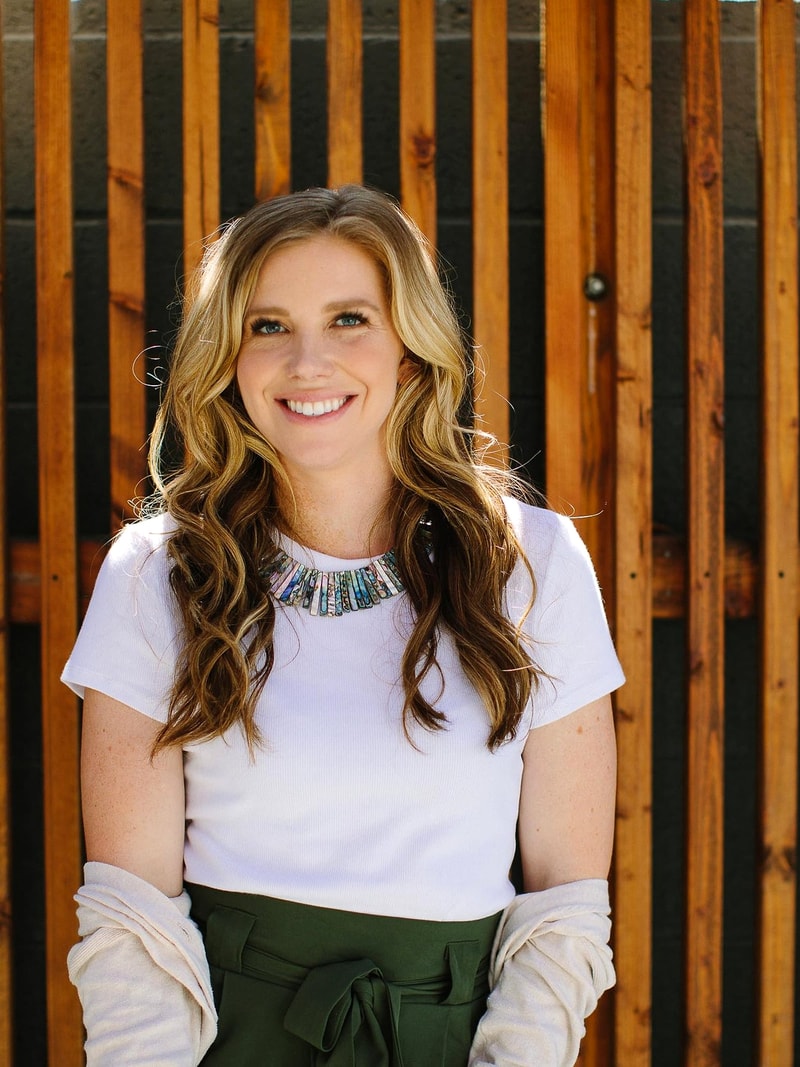
Christina Mathieson
Licensed Marriage and Family Therapist (LMFT) #115093
Human sexuality, couples work, ADHD and neurodiversity-affirming therapy, and affirming care for individuals navigating relationships, identity, and life transitions.
FAQ
Common questions about trauma therapy.
What is IFS, in plain language?
+
Internal Family Systems (IFS) is a model that treats the different 'parts' of you, the inner critic, the people-pleaser, the part that numbs out, the perfectionist, as adaptations that made sense at some point and are still trying to help. The work isn't getting rid of those parts; it's helping them step back so the wounded parts underneath them can finally heal. Christina Mathieson, LMFT #115093, has completed IFS training, and IFS is the foundational frame for the trauma work in our practice.
Do I have to talk about what happened?
+
Not in detail, and not until you're ready. Both IFS and EMDR can do meaningful trauma work without extensive verbal retelling. IFS in particular works with present-moment internal experience, you can do this work without ever describing the original event in detail, if that's what fits.
What's the difference between trauma therapy and regular talk therapy?
+
Trauma therapy is designed for experiences that are stored differently in the brain and body, not just thoughts and memories. Regular talk therapy can leave you with insight but no felt shift. Trauma-informed modalities like IFS, EMDR, and somatic experiencing work on the physiological, emotional, and structural level, not just the cognitive.
Will trauma work make me feel worse before I feel better?
+
Sometimes, particularly when long-held material starts to move. Good trauma therapy paces carefully to prevent overwhelm, and IFS in particular is designed to slow down whenever a protective part needs more time. Your therapist will check in constantly and adjust pacing.
How is IFS different from inner-child work?
+
IFS is broader and more structured than inner-child work, though both engage younger, wounded parts of the self. IFS identifies multiple categories of parts (managers, firefighters, exiles), works with the protective parts before going to the wounded ones, and operates from the premise that the client's core Self has the qualities needed to do the healing rather than relying solely on the therapist as the source of repair. The therapist's role is to help facilitate Self-to-part dialogue, not to reparent directly.
How do IFS and EMDR work together?
+
They pair extraordinarily well. EMDR works on the integrative layer (helping the brain finish processing trauma material), and IFS works on the structural layer (helping the parts that formed around the trauma update their roles). We often use IFS first to identify and build relationships with the protective parts that would otherwise block EMDR reprocessing, then use EMDR to process the underlying material once those parts agree to step back. Many sessions blend both modalities.
Is IFS evidence-based?
+
Yes. SAMHSA's National Registry of Evidence-Based Programs and Practices (NREPP) rated IFS as evidence-based in 2015. NREPP itself was discontinued in 2018, but outcome research has continued to accumulate across PTSD, complex trauma, depression, anxiety, and even chronic medical conditions. The evidence base is smaller than EMDR's (which has decades more research), but it is meaningful, and IFS is now one of the most widely adopted modalities in trauma therapy practice.
Can I do trauma therapy if I'm not ready to dig into childhood?
+
Yes. Not all trauma work involves going to childhood. Single-event trauma in adulthood (an accident, an assault, a medical event, a loss) can be processed without revisiting earlier history. For complex trauma, the work often does involve earlier material eventually, but the pacing is yours, and IFS is structured so that no exile (wounded part) is approached without the protective parts agreeing first.
How long does trauma therapy take?
+
Single-incident trauma is typically a shorter course of EMDR work, often around 8 to 15 sessions. Complex trauma (childhood, chronic, relational) typically takes longer, often a year or more, because there are many layers and the protective system has been in place for decades. We'll be honest about timeframes once we understand what you're working on.
Can trauma therapy be done online?
+
Yes. IFS works exceptionally well online. The work is internal, and many clients find it easier to do parts work in their own space. EMDR also translates well to telehealth. Some body-based somatic work benefits from in-person delivery; we'll discuss what's clinically appropriate during intake.
What if trauma work surfaces things I can't handle between sessions?
+
Phase 1 (preparation and stabilization) is designed to build the resources you'll need before any reprocessing happens. Your therapist will help you develop grounding techniques, distress tolerance skills, and concrete plans for between-session waves of intensity. If material starts to surface beyond what your supports can hold, we'll slow down. Pacing is always adjustable.
Will I have to do homework between sessions?
+
Sometimes. IFS often involves between-session check-ins with parts you've started getting to know in session. EMDR may include grounding practice or journaling. The 'homework' is collaborative and never punitive; if a practice isn't working, we'll change it.
What if my trauma involves the people I currently love or live with?
+
This is common, and it's one of the reasons trauma work in adulthood is hard. Part of the work involves figuring out what you can do internally regardless of others, what (if anything) you want to address with them, and what the boundaries need to be. IFS in particular is helpful here because it lets you work with your own response to a relationship without requiring the other person to change.
Who on your team specializes in trauma?
+
Christina Mathieson, LMFT #115093, has completed IFS training and is the team's lead for IFS-centered trauma work. Jalyse Stewart, AMFT #153712 (supervised by Christina), specializes in EMDR for trauma, particularly for women healing from childhood sexual abuse and complex trauma, and incorporates IFS-informed approaches in her practice.
References & further reading
- IFS Institute: Internal Family Systems, IFS Institute
- No Bad Parts by Richard C. Schwartz, PhD (IFS founder), Richard C. Schwartz, PhD / IFS Institute
- Internal Family Systems Therapy by Richard C. Schwartz, PhD (the foundational text), Richard C. Schwartz, PhD / Guilford Press
- IFS Institute: Six F's outline of the IFS model, IFS Institute
- APA Clinical Practice Guideline for the Treatment of PTSD, American Psychological Association
- Internet-based cognitive and behavioural therapies for PTSD, Cochrane systematic review, Cochrane Database of Systematic Reviews
- EMDRIA: EMDR International Association, EMDRIA
- Somatic Experiencing International (Peter Levine, PhD), Somatic Experiencing International
- The Body Keeps the Score, Bessel van der Kolk, MD, Bessel van der Kolk, MD
- Polyvagal Theory by Stephen Porges, PhD, Stephen Porges, PhD
- Rising Strong, Brené Brown, Brené Brown
Last clinically reviewed: June 25, 2026 by Christina Mathieson, LMFT #115093.
Free monthly workshop
Underneath the Resentment: Attachment Wounds, Blame, and the Way Back to Each Other
Tuesday, July 28, 2026 · 6:00 PM PT · Zoom · Free
Related
EMDR Therapy
Structured bilateral stimulation therapy for processing trauma so it stops replaying in the background.
Learn moreCouples Therapy
Gottman Method, EFT, attachment-based work, and sex therapy integrated into relationship care for partners at any stage. Weekday and weekend availability.
Learn moreIndividual Therapy
One-on-one therapy for anxiety, depression, identity, trauma, and the patterns you can see but can't yet shift.
Learn moreReady to talk it through?
Free 15-minute call. We'll figure out if trauma therapy is the right work for where you are, and match you with the right person on our team.
Book a Free Consult