

For the weight women carry
Therapy that names what you've been calling "just tired."
Reviewed by Christina Mathieson, LMFT #115093 · June 2026
For women navigating postpartum, perimenopause, life transitions, caregiving load, and the kind of exhaustion that comes from being the person everyone else relies on. Telehealth across California.
If this sounds like you
- Postpartum adjustment is hitting harder than anticipated, or has stretched into territory that isn't baby blues
- Perimenopause or menopause is changing your mood, sleep, or sense of self in ways you weren't prepared for
- You're processing reproductive experiences: pregnancy loss, infertility, abortion, birth trauma
TL;DR
If you have been calling it 'just tired' for months — the postpartum reality that is heavier than anyone warned you, the being-the-strong-one that has started to cost more than it gives, the twenties or thirties spent figuring out career and partnership, or the perimenopause your body did not warn you was coming — this page is for that. Women's mental health is its own clinical area, not a softer version of general therapy. Trauma-informed care for the transitions, the overwhelm, the invisible labor, and the exhaustion of being the person everyone else relies on. Online across California, with coordination to your OBGYN or reproductive psychiatrist when hormonal or reproductive care is part of the picture.
Who on our team does this work
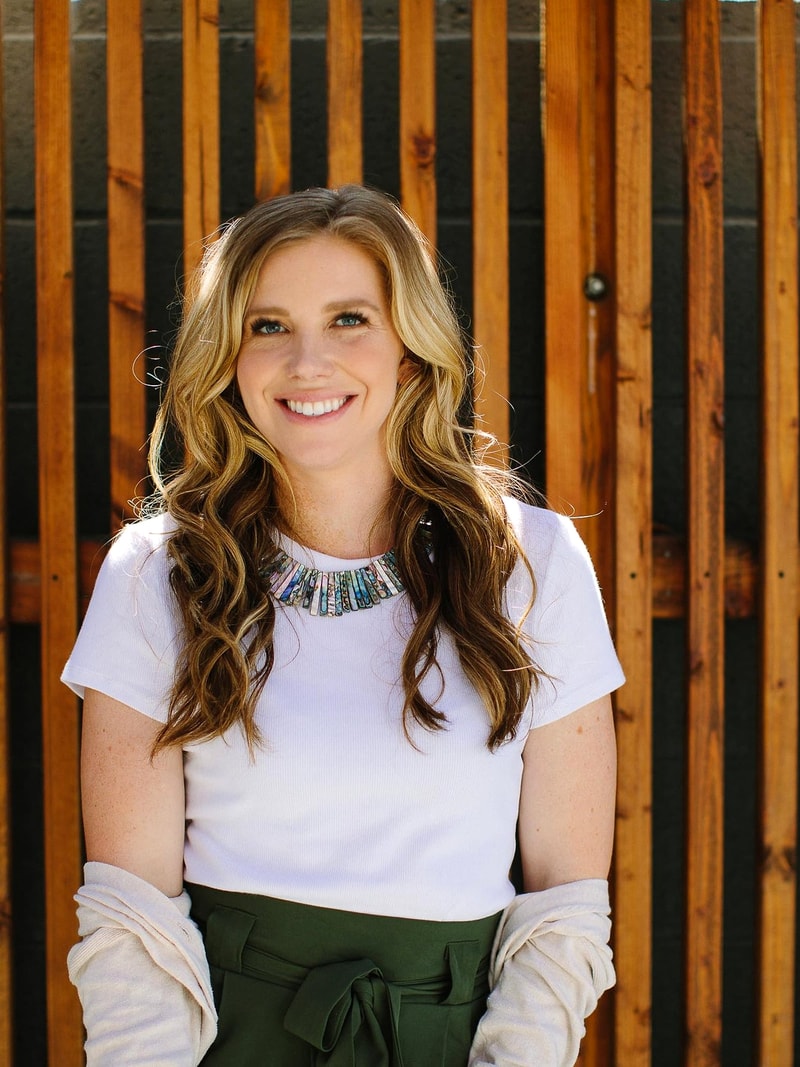
Christina Mathieson, LMFT #115093 — A therapist and mother navigating matrescence herself. Perinatal, postpartum, identity work, and PREPARE/ENRICH-trained premarital counseling for women in the run-up to marriage and in the thick of motherhood.

Michelle Cortez, AMFT #146795, supervised by Christina Mathieson, LMFT #115093 — EFT and attachment-based work. Strong for the relational shifts around motherhood, partnership, and the career-motherhood balance.

Jalyse Stewart, AMFT #153712, supervised by Christina Mathieson, LMFT #115093 — EMDR-trained trauma specialist. Birth trauma, reproductive trauma, and women processing childhood or sexual trauma alongside motherhood.
Good fit if
- Postpartum adjustment is hitting harder than anticipated, or has stretched into territory that isn't baby blues
- Perimenopause or menopause is changing your mood, sleep, or sense of self in ways you weren't prepared for
- You're processing reproductive experiences: pregnancy loss, infertility, abortion, birth trauma
- The career-motherhood balance has become unsustainable and you don't know what to cut
- You're caring for aging parents while managing your own household, career, or family, and running on empty
- You're in a life transition (career shift, empty nesting, divorce, adult-child dynamics changing) that is reshaping your identity without a script
- You're juggling multiple roles (mother, caregiver, partner, professional) that all feel non-negotiable, and hating yourself for not doing any of them well
- You've always been 'the strong one,' the friend or sibling who holds it together for everyone else, and nobody asks how you are anymore because everyone assumes you're fine
- You've put other people's needs first for so long that you can't quite remember what your own needs are
- You're in your twenties or thirties working through career, dating, and partnership, and want a therapist who takes 'I'm functional and quietly running out of gas' seriously
- You're dating after a divorce, figuring out who you are outside of the marriage that shaped you and what you actually want in a partner now
- You're engaged or preparing for marriage and want a space to work through what wedding planning has been surfacing — family-of-origin patterns, identity shifts, the honest conversations engaged couples were not taught how to have
- You're the emotional manager for your family and you're running on empty
- You want a therapist who knows women's mental health as a distinct clinical area, not as general therapy applied to a woman
Not a fit if
- Acute perinatal psychiatric emergencies, we may recommend specialty perinatal care first
Not sure which column you're in? Book a free consult. If we're not the right fit, we'll help you find someone who is.
What the work looks like
How we actually work together.
The intake is the same as any therapy, context, current concerns, goals, but the focus is on what's specifically shaping the experience of being a woman (or femme-identified) right now. That might be hormonal, relational, systemic, or some combination.
We draw from CBT and ACT for practical tools, trauma-informed approaches when reproductive or relational trauma is part of the picture, EMDR when specific events are still live, and relational work for the partner and family dynamics that often need to shift alongside the personal work.
If medical or hormonal coordination is needed, we connect with your OBGYN, perinatal psychiatrist, or primary care provider. You shouldn't have to navigate the systems alone.
Modalities we draw from
 For the overwhelmed woman — moms, caregivers, and anyone trying to keep it all together
A lot of what brings women into our office is not a specific diagnosis. It is the felt sense that something has been off for months, that 'just tired' does not quite cover it, that the smaller version of who you were seems further away every week. What that looks like in real life: every minute of the day accounted for, no cognitive bandwidth left for anything that isn't survival, snapping at the people you love and hating that you did, and a background feeling that you are failing at something even when the day objectively went fine.
The specifics vary. You might be a new mom stuck on emergency-power settings since the baby came home. You might be caring for an aging parent while managing your own household and a demanding job. You might be mid-career transition, reinventing yourself in your forties while still being the person your family, your team, and your friends rely on. You might be juggling three or four roles that all feel non-negotiable and hating yourself for not doing any of them well. You might be the one everyone has always called 'the strong one' — the friend who holds it together for everyone else, the sibling who manages the family, the coworker no one worries about because you always seem fine — and you have started to notice that nobody asks how you are anymore. You might be so used to putting other people's needs first that you have lost the thread of what your own needs even are. You might be dating after a divorce, trying to figure out who you are outside of the marriage that shaped you. You might be engaged or in the run-up to a wedding, holding the emotional and logistical weight of a life-defining event while also being expected to feel only excitement. What these situations share is a sustained mismatch between demand and recovery, in a season that does not have slack built into it. The pattern underneath the presenting symptoms is often the same, even when the surface story is different.
That is not a personality flaw or lack of effort. It is what happens when the system you depend on was never designed for this level of continuous output, and when we talk about postpartum depression, perinatal anxiety, or perimenopausal mood shifts in the sections below, that pattern is often what is actually underneath.
Overwhelm is not the same as depression, though it can slide into depression when it goes unaddressed for long enough. It is the state where you have been stuck on emergency-power settings for so long that some part of you has forgotten what a regulated nervous system feels like. Therapy is one of the few places where you can slow down enough for that recognition to become possible, and slowly build back the buffer you have been going without.
For women navigating early adulthood — dating, job, partnership, figuring out what you want
A lot of the women we work with are in their twenties or thirties, not yet in the perinatal or perimenopausal stages, but working through what adulthood as a woman actually looks like: the pressure to have your career on track by a specific age, dating culture that plays by other people's rules more than your own, the question of whether you want partnership at all, and the slow working-out of who you actually are apart from what everyone else has needed you to be.
The felt experience varies. You might be dating in a market that feels punishing and starting to wonder if the problem is you. You might be well into a career you built on autopilot and noticing you do not actually want the next promotion. You might be in a relationship that is not bad, exactly, but leaves you feeling like a smaller version of yourself, and you cannot quite name why. You might be single by choice or circumstance and pretending it does not sometimes feel like something is missing. What most of these share is a mismatch between the life you are living and the person underneath, and not a lot of language for the mismatch.
Adulthood-in-progress therapy is not about fixing what is broken, because usually nothing is broken. It is about slowing down enough to hear what you actually want, which is harder than it sounds when you have spent years reading what other people expect of you. The work is often equal parts identity, boundaries, attachment patterns, and figuring out what a life you would design would actually look like, which the culture around you has probably not given you a lot of help imagining.
For many young-adult women, therapy is also the first place they get to be honest about what has been hard without needing to make it a crisis. If you are functional and successful and also quietly running out of gas, that is still a legitimate reason to come in.
Perinatal and postpartum mental health: from baby blues to perinatal depression
The perinatal period (pregnancy through the first year postpartum) is one of the most psychiatrically vulnerable stretches in the female lifespan. According to Postpartum Support International, about 1 in 5 birthing parents experience a perinatal mood or anxiety disorder, making this group of conditions more common than gestational diabetes or preeclampsia. Despite that, fewer than 25 percent of affected parents receive adequate treatment, often because the symptoms get normalized as 'just baby blues' or because new parents don't have time, energy, or referrals to seek help.
Baby blues are real and self-limiting: tearfulness, mood swings, and fatigue in the first two weeks after birth, affecting up to 80 percent of birthing parents and resolving on its own. What we treat clinically is what comes after that two-week window or what shows up during pregnancy. Perinatal depression, perinatal anxiety, postpartum OCD, postpartum PTSD (often after a difficult birth), and in rare cases postpartum psychosis (a psychiatric emergency requiring immediate evaluation) are all distinct presentations with different treatment paths.
Treatment in the perinatal period has its own considerations. Medication choices are made jointly with a reproductive psychiatrist and OBGYN, weighing both treatment risk and the documented risks of untreated perinatal mental illness on parent and infant. Therapy itself is often particularly effective in this window because the patterns being formed (around the new baby, around the changed relationship with a partner, around the emerging parent identity) are still actively being shaped rather than entrenched. CBT, IPT, and trauma-focused approaches have the strongest evidence for perinatal mood disorders.
Birth trauma is its own category. Roughly 3 to 4 percent of birthing parents meet full PTSD criteria post-birth in community samples, with substantially higher rates (up to 9 percent or more) reported in samples of women who self-identify the birth as traumatic. Many more carry subclinical trauma symptoms that interfere with bonding, intimacy, or future reproductive decision-making. Trauma-focused CBT is the most-studied intervention for postpartum PTSD; EMDR has a smaller but promising evidence base, with pilot RCTs and ongoing studies (PERCEIVE, OptiMUM) showing benefit. Jalyse Stewart, AMFT #153712 (supervised by Christina Mathieson, LMFT #115093), works with birth trauma using EMDR and somatic practices.
If any of this is landing — the exhaustion, the invisible workload, the postpartum reality no one warned you about — a free 15-minute consult with our intake coordinator is a low-pressure place to start. She will match you with the clinician who fits.
Perimenopause as a mental health event: mood, cognition, and the under-treated middle years
Perimenopause typically begins in a woman's early-to-mid 40s and lasts an average of 4 to 8 years before menopause itself, with The Menopause Society providing the most rigorous current clinical framework. It's a hormonal transition, not just a slowdown of fertility, and the mental health effects are substantial and under-recognized. Research over the last decade documents elevated rates of depression, anxiety, sleep disruption, cognitive fog, and a phenomenon increasingly called 'perimenopausal rage' that often surprises clients and the people around them.
What we see clinically: women in their 40s and early 50s coming in with a presentation that doesn't quite match a classic depression or anxiety diagnosis. The mood drops aren't reliably linked to circumstance. The anxiety is harder to argue with. Sleep is fragmented in ways that don't respond to standard sleep hygiene. Cognitive load that used to be effortless feels like wading through fog. Memory feels less reliable. And the irritability often surprises people who didn't think of themselves as irritable previously.
The clinical picture is often complicated by under-treatment in the medical system. Many clients describe being told their symptoms are 'just stress' or 'just normal aging' by primary care providers who didn't connect the constellation to perimenopause. Hormone therapy (HT, formerly called HRT) has been re-evaluated in the last decade after the misinterpreted 2002 Women's Health Initiative findings; current guidance from The Menopause Society supports HT for many symptomatic women, with risk-benefit analysis tailored to individual factors. We're not your prescriber, and we don't make hormonal decisions, but we can help you think through what to bring to your medical team, and when a release is signed and it would benefit the work, we can coordinate with that team directly.
Therapy in this window often combines several threads: ACT or CBT for the cognitive and emotional shifts, somatic and mindfulness practices for nervous system regulation, identity work for the changes in self-concept that often accompany the transition, and relational work for the ways perimenopause shows up in partnership and parenting. The framing matters. This isn't a return to baseline that we're waiting out. It's a transition into a new phase, and the work is figuring out who you are in that phase, not who you used to be.
Life transitions: identity, caregiving, and the sandwich generation
A lot of the women we work with come in during a transition that is not clinically named, but is producing real distress. The shape varies: a job change in your forties that feels like starting over when everyone expected you to have arrived; caring for an aging parent while your kids still need you; empty nesting after two decades of the household depending on your labor; a divorce ending the identity you built alongside a partner; adult children moving back or moving far away; the death of a parent that reshapes who you are in the family.
These transitions do not always match a DSM category, but they can produce depression, anxiety, grief responses, and identity disturbance that are real and worth working with. In the clinical literature this cluster is often described under 'adjustment disorder'; in practice, what most women describe is closer to 'I don't quite know who I am right now, and I have too much to hold to figure it out.'
Therapy in a life transition usually has three threads running at once. The first is grief work for what has ended, even when the ending is on paper 'positive.' The second is identity reconstruction, which is slower and less linear than most people expect. The third is nervous-system regulation, because most transitions land in a body that is already carrying more than it should. When the transition is happening alongside perimenopause, postpartum recovery, or a health crisis, the layering matters and we work with all of it in the room.
The sandwich generation phenomenon (caring for aging parents while raising your own children) deserves specific naming. Women in this position are often carrying the emotional labor of two or three households at once, with limited social recognition for the toll it takes. What we see clinically: the coordination burden, the anticipatory grief around a parent's decline, the guilt over never being fully present anywhere, and the private erosion of the pieces of yourself that used to be steady. This is a legitimate clinical presentation, not a lifestyle problem, and it responds to therapy with someone who takes it seriously.
Dating after divorce is its own specific clinical presentation. You are often stepping into the dating world with a body, a history, and a set of standards that the earlier version of you did not have. Some part of you is still processing the loss of the marriage, even when the marriage needed to end. Another part is trying to figure out what you actually want in a partner now, which is often very different from what you wanted at twenty-five. A third part is contending with the practical reality of dating apps, blended families, and the exhaustion of building intimacy from scratch when you already know how much it can cost. The work is often equal parts grief for what ended, curiosity about what you are becoming, and clear-eyed attention to the patterns you do not want to repeat.
Preparing for marriage is another point where women often come in, and one that is under-served by the culture around it. Wedding planning is a life-defining, high-stakes stretch, and the pressure to feel only excitement often makes it hard to name what is actually there — the family-of-origin patterns that get activated in the run-up to a wedding, the identity shifts that happen when two people begin committing to being one household, the honest conversations about money, sex, kids, and roles that most engaged couples were not taught how to have. Pre-marital therapy tends to be a high-yield window for this work, because the version of your life you are building is still being built.
Christina Mathieson, LMFT #115093, is trained in PREPARE/ENRICH, the research-based couples assessment that has structured premarital counseling for over four decades and has more than 1,200 published articles supporting its validity and reliability. The tool grounds the conversation in the specific strengths and growth areas in your particular relationship rather than in a generic checklist. Most engaged couples come in for a focused stretch of sessions, and the partner joins the work when both are ready.
Why women's mental health is its own clinical area
Women's mental health isn't a softer version of general mental health. It's shaped by a different set of biological, hormonal, social, and structural factors, and the research base has only caught up in the last two decades. Until the early 1990s, women were largely excluded from clinical drug trials, including most antidepressant research, and the diagnostic criteria for many disorders were calibrated on predominantly male populations. The NIH Revitalization Act of 1993 made the inclusion of women in federally-funded research mandatory, and the data we now have on how mental health presents differently in women is largely a product of the last 30 years.
What that meant in practice is that an entire generation of women were assessed against criteria that often didn't fit them, treated with medications dosed on male physiology, and told their concerns were 'just hormones' or 'just stress.' That history shapes the clinical room you walk into now. Many of our clients have a story of being dismissed, misdiagnosed, or given vague reassurance when something specific was going on. Therapy here often starts by taking your specific experience seriously and describing it in language that fits, rather than reaching for the generic categories that missed you before.
Women are roughly twice as likely as men to be diagnosed with depression and anxiety, with the World Health Organization summarizing the global picture here. The reasons are layered: hormonal contributions across the menstrual cycle, perinatal period, and perimenopause; the sustained burden of caregiving and emotional labor in households where it remains unevenly distributed; higher rates of sexual trauma; and the cultural training that women internalize relational difficulty as personal failure.
Therapy that takes women's mental health seriously names all of those layers. We work with the hormonal, the relational, the systemic, and the personal at the same time, because they're interacting in real time. When hormonal or medical evaluation belongs in the picture, we may recommend specialty care (an OBGYN, reproductive psychiatrist, or primary care provider); when a release is signed and it would benefit the work, we can coordinate with your treatment team. The cultural context is held alongside the specifics of your particular life, your particular relationships, and your particular body.

Wondering if we're the right fit for what you're working on?
Free 15-minute call. We'll figure out together if we're the right starting point.
Book a Free ConsultWondering about cost? See what therapy costs in California.
Who on our team does this work
3 therapists who specialize here.
Jalyse Stewart
Registered Associate Marriage and Family Therapist (AMFT) #153712
Supervised by Christina Mathieson, LMFT #115093
Trauma-informed therapy for women healing from childhood sexual abuse, complex trauma, and what a lifetime of carrying other people's weight does to the nervous system. I also work with neurodivergent clients and trauma that intersects with grief, anxiety, or chronic overcompensation.
Christina Mathieson
Licensed Marriage and Family Therapist (LMFT) #115093
Human sexuality, couples work, ADHD and neurodiversity-affirming therapy, and affirming care for individuals navigating relationships, identity, and life transitions.
Michelle Cortez
Registered Associate Marriage and Family Therapist (AMFT) #146795
Supervised by Christina Mathieson, LMFT #115093
If therapy has felt too slow or too surface-level, that is exactly what I work against. Couples stuck in attachment patterns, anxiety and OCD, and neurodivergent clients who need structure and real feedback.
FAQ
Common questions about women's therapy.
Do I have to be a mother to do women's therapy here?
+
No. Women's therapy as we practice it covers the full range of experiences women face: identity, career, reproductive health, relationships, aging, loss. Motherhood is one thread among many.
Do you do postpartum-specific work?
+
Yes. We work with postpartum adjustment, birth trauma, perinatal anxiety and depression.
I'm in perimenopause and feel like I'm losing my mind. Can you help?
+
Yes. Perimenopause affects mood, sleep, cognition, and identity in ways that mainstream medicine still under-treats. Therapy doesn't replace hormonal care (ask your OBGYN), but it addresses the emotional and identity shifts and helps you advocate within the medical system.
Is this only for cisgender women?
+
No. The work is for anyone navigating the cultural load placed on women and femme-identified people. For gender-specific concerns (transitioning, gender dysphoria), see /lgbtq-therapy or ask us about fit.
Do you offer premarital counseling?
+
Yes. Christina Mathieson, LMFT #115093, is trained in PREPARE/ENRICH, the research-based couples assessment that has structured premarital counseling for over four decades and has more than 1,200 published articles supporting its validity and reliability. Premarital work with her grounds the pre-wedding conversation in the specific strengths and growth areas in your particular relationship, not a generic checklist. Most engaged couples come in for a focused stretch of sessions, and the partner joins the work when both are ready.
References & further reading
- Bromberger et al. (2010), Longitudinal change in reproductive hormones and depressive symptoms across the menopausal transition: results from the Study of Women's Health Across the Nation (SWAN), Archives of General Psychiatry, Peer-reviewed research
- Kim, Strathearn & Swain (2016), The maternal brain and its plasticity in humans, Hormones and Behavior, Peer-reviewed research
- Soares (2014), Mood disorders in midlife women: understanding the critical window and its clinical implications, Menopause, Peer-reviewed research
- Postpartum Support International, PSI
- APA: Women's psychological health research, American Psychological Association
- The Menopause Society: perimenopause and menopause resources, The Menopause Society
- Untamed by Glennon Doyle, Glennon Doyle
- Burnout, Emily & Amelia Nagoski (stress cycle and the body), Emily Nagoski, PhD & Amelia Nagoski
- The Whole-Brain Child by Daniel J. Siegel, MD & Tina Payne Bryson, PhD, Daniel J. Siegel, MD & Tina Payne Bryson, PhD
- We Can Do Hard Things (podcast) by Glennon Doyle, Glennon Doyle
- Fair Play by Eve Rodsky (domestic labor & partnership), Eve Rodsky
- I Thought It Was Just Me (But It Isn't), Brené Brown, Brené Brown
Last clinically reviewed: June 25, 2026 by Christina Mathieson, LMFT #115093.
Free monthly workshop
Underneath the Resentment: Attachment Wounds, Blame, and the Way Back to Each Other
Tuesday, July 28, 2026 · 6:00 PM PT · Zoom · Free
Related
Anxiety Therapy
CBT, ACT, and exposure-based therapy for generalized anxiety, panic, social anxiety, and OCD.
Learn moreTrauma Therapy
Trauma therapy across IFS, EMDR, narrative therapy, ACT, DBT, and somatic practices, matched to the framework that fits your situation.
Learn moreIndividual Therapy
One-on-one therapy for anxiety, depression, identity, trauma, and the patterns you can see but can't yet shift.
Learn moreReady to talk it through?
Free 15-minute call. We'll figure out if women's therapy is the right work for where you are, and match you with the right person on our team.
Book a Free Consult