
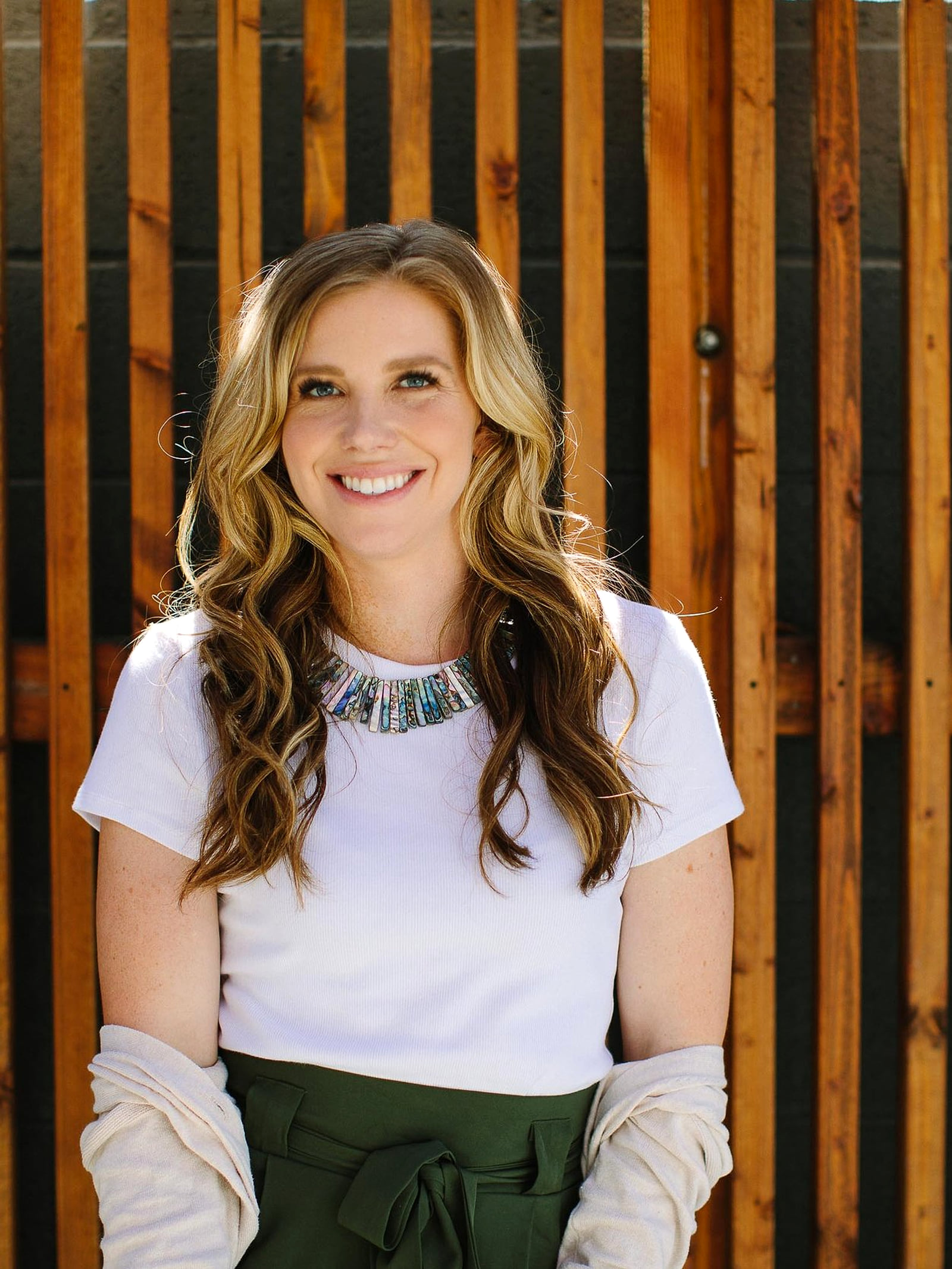
By Christina Mathieson, LMFT #115093, founder of My Mental Climb and a couples-and-sex-therapy-trained clinician who works extensively with adult ADHD.
TL;DR. When Sincere Rhea said on Love Island USA Season 8 that he went through "the seven stages of grief in 25 minutes," he was describing a real biological process he didn't have language for. Cortisol, the slow-acting stress hormone, peaks 20 to 30 minutes after an acute social stressor, which means his felt experience was syncing with the actual neuroendocrine timeline of an acute social-rejection response. For ADHD viewers, that response gets dialed up by a brain that already runs hot on rejection cues, and the recoupling format of the show keeps that dial in the activated zone for entire episodes. This is what rejection sensitive dysphoria looks like in real time, and it is why an ADHD viewer can walk away from a single episode noticeably more activated than the same episode would leave a neurotypical brain.
On the night of the first recoupling on Love Island USA Season 8, Sincere Rhea watched his partner Melanie get pulled aside by Corbin Mims, the bombshell who had just arrived. By the end of the recoupling, Beatriz had been led away from her partner Sean by Gabriel, and Sean became the first islander dumped from the villa. In his confessional, Sincere delivered the line that has been quoted across TikTok and Reddit since: "I literally went through the seven stages of grief in 25 minutes."
He was joking. He was also accidentally accurate about something most people only experience as a feeling.
Why 25 Minutes Felt Like Forever
The body's response to an acute social stressor runs on two systems with different timelines. The fast system, the sympathetic nervous system, fires within seconds. Heart rate climbs, breath quickens, attention narrows. This is the part most people identify as "stress," and it shows up immediately when you watch your partner walk off with someone else, on television or in your own life.
The slower system is the HPA axis, the hypothalamic-pituitary-adrenal cascade that releases cortisol. Cortisol is the downstream hormone that sustains the stress response and is responsible for a lot of what makes acute stress feel like it is still happening even after the triggering event has ended. Decades of laboratory research using the Trier Social Stress Test, the standardized protocol that introduces a brief social-evaluative threat in a controlled setting, have documented that cortisol levels peak 20 to 30 minutes after the stressor begins. The body builds toward peak distress on a curve, holds it for several minutes, and then begins the longer descent.
That is why 25 minutes felt like seven stages of grief for Sincere. His sympathetic system was already firing during the recoupling itself, but the cortisol that locks in the felt experience of acute distress was building toward peak across that exact window. By the time he sat down in the confessional booth, his nervous system was at the most chemically activated point of the entire event. The grief description was not poetic license; it was an accurate, in-real-time read of what his body was doing.
There is a second layer that makes this specifically a rejection response, not just generic stress. Naomi Eisenberger's foundational 2003 study showed that social rejection, in her case a controlled experimental exclusion called CyberBall, activates the dorsal anterior cingulate cortex and anterior insula, the same neural regions that process the affective component of physical pain. Subsequent work, including a 2014 Nature Communications study by Woo and colleagues, has refined the picture: social pain and physical pain share neural real estate but also have distinct representations. The functional point holds, though. When you see your partner choose someone else, the brain processes it through some of the same circuitry that processes a burn or a cut. The word "hurt" is not metaphorical.
What Sincere narrated was the felt experience of his amygdala and anterior cingulate getting flooded, his cortisol building toward peak, and his prefrontal cortex losing the bandwidth to regulate any of it. Twenty-five minutes is the half-life of that wave.
Why ADHD Brains Feel It Harder
What makes this a clinical conversation, not just a neuroscience explainer, is what happens when this exact same wave hits a brain with ADHD.
Rejection sensitive dysphoria, often shortened to RSD, is the intense and frequently physically painful response to perceived rejection, criticism, or failure that most adults with ADHD experience. The term was coined by William Dodson, a psychiatrist who specialized in adult ADHD, and he estimated that nearly all of his adult ADHD patients reported experiencing it, with about a third describing it as the single most disabling feature of their ADHD. A 2024 qualitative study published in PMC documented the lived experience of rejection sensitivity in ADHD across multiple participants and found that it consistently described as physical, sudden, and disproportionate to the triggering event.
RSD is not in the formal DSM-5 criteria for ADHD, and the research literature is still working out where exactly it sits relative to emotional dysregulation more broadly. What clinicians who work with adult ADHD see is consistent: the rejection signal lands harder, lasts longer, and recruits more of the body than it does in a neurotypical brain. Episodes typically last from a few minutes to a few hours, can repeat multiple times in a single day, and tend to be most intense when the cue is interpersonal.
The downstream cost of running an over-activated rejection-detection system for years includes the patterns most adult ADHD clients describe before they have language for any of this: avoiding social risk, over-preparing to prevent failure, perfectionism that looks like overachievement but feels like protection, and reactivity in relationships where a partner's neutral tone gets read as criticism. The work in therapy is partly building skill at noticing the moment of activation early enough to intervene, and partly grieving how much energy went into managing the signal before there was a name for it.
For an ADHD viewer watching Sincere watch Melanie walk away with Corbin, the cortisol curve and the rejection-pain neural activation are not abstract. The viewer is having a version of it in their own body, in real time, with no logical reason for it to be that intense.
Why You're Crashing Out Watching
The word for what happens to viewers, in the TikTok vocabulary that has accumulated around Love Island, is "crashing out." Crisis Text Line and Northeastern news researchers define it as a sudden emotional or physical shutdown driven by prolonged stress or overstimulation reaching a breaking point. Merriam-Webster has added the term to its slang section. The phrase went mainstream after Season 7 contestant Huda Mustafa's on-air crash-out moments became one of the most-shared sequences of the season, and viewers picked it up immediately, often turning the term back on themselves. Fans describe themselves crashing out when their favorite contestant gets dumped, when a recoupling goes a way they didn't want, or when a romantic storyline falls apart, and the intensity of the response surprises them. It feels disproportionate to the fact that none of these people know they exist.
What is happening, neurologically, is parasocial attachment activation. The term was coined by sociologists Donald Horton and Richard Wohl in a 1956 paper in Psychiatry to describe the one-sided emotional bonds people formed with early television broadcasters. Their argument was that the medium was deliberately designed to make viewers feel addressed, recognized, and connected to figures who could not see them back. Decades of subsequent research have shown that parasocial bonds activate the same attachment system that processes real relationships, with some attenuation in intensity but not in kind.
Reality television, especially the format Love Island uses, amplifies parasocial intensity beyond what scripted television produces. The contestants are presented as unscripted, accessible, and emotionally available. Their interior states are narrated in confessionals. Their relationships develop in real time across episodes that drop daily. By the time a favorite contestant gets dumped, viewers have invested attention, emotional energy, and identification that the brain treats as a real attachment bond, because that is the only way the brain knows how to treat sustained focused attention on another person.
For viewers with anxious attachment styles, the brain's social pain response to a parasocial loss is amplified further. Research on attachment style and brain rejection response has shown that anxiously attached people produce stronger activation in the pain-processing regions when exposed to social rejection cues, including cues directed at other people. The system that was built to keep you connected to caregivers as a child generalizes outward as an adult, and it doesn't always check whether the person you're losing is someone you actually know.
For ADHD viewers carrying RSD, all of these systems are already running hot. The parasocial bond forms faster, the rejection cue lands harder, and the recovery takes longer. Add a partner sitting next to you commenting on the screen, and you have a recipe for what feels like a disproportionate emotional response to a television show, and what is actually a neurologically appropriate response to the situation the show is creating in your body.
The Recoupling Format Is a Dopamine Trap
There is one more piece of the picture, and it is the one that explains why Love Island specifically, more than other dating shows, produces this level of viewer activation. The recoupling format runs on variable-ratio reinforcement.
Variable-ratio reinforcement is the schedule of reward delivery that B.F. Skinner identified as the most behaviorally activating of any reinforcement pattern. When reward is delivered unpredictably, after a variable and unknowable number of behaviors, the brain's dopamine system fires more intensely in anticipation than it does when reward is consistent and expected. This is the mechanism that makes slot machines compelling, the mechanism that makes social media notifications hard to stop checking, and the mechanism that makes the question of who will recouple with whom in this episode feel more urgent than information about a stranger should feel.
Each Love Island episode delivers a small number of meaningful relational outcomes (a kiss, a recoupling, a dumping) embedded in many minutes of uncertain content. The reward schedule is variable in the truest behavioral sense: viewers cannot predict which conversation will be the one that changes a couple's trajectory, which means every conversation is potentially the one. Attention stays high across the whole episode because the brain is running anticipation on a variable-ratio schedule.
ADHD brains are particularly responsive to variable-ratio schedules because the dopamine system in ADHD is already calibrated toward novelty, unpredictability, and intermittent reward. What is mildly absorbing for a neurotypical viewer is acutely hyperfixating for an ADHD viewer. Combined with the parasocial attachment and the RSD amplification, this is the mechanism behind a real and underdiscussed pattern: an ADHD nervous system can complete a full activation cycle across a single episode of this show, in a way that comparable dating shows without the recoupling-elimination format don't reliably produce.
It is also why the "ick" makes intuitive sense in this format. The ick, popularized by 2017 contestant Olivia Attwood and now analyzed in psychological frames as a defense mechanism rooted in attachment anxiety or self-projection, is what happens when the variable-reward attention pattern abruptly inverts. The brain has been running anticipation on someone, the unpredictability has been activating, and a single observed behavior (a bad dance move, a small tell of insecurity) flips the polarity from approach to avoidance. For someone with RSD or avoidant patterns, the ick is often a preemptive shutdown of intimacy before the threat of rejection lands. It is functional. It is also, in long-term dating, costly, because it can pull the plug on real connection before it has a chance to demonstrate that it is safe.
What This Means If You're an ADHD Viewer
You are not making it up. Reality television is not "just entertainment" for a nervous system calibrated the way yours is. The combination of parasocial attachment, variable-ratio reinforcement, RSD amplification, and the synchronized cortisol curve of an extended social-rejection narrative is a clinically meaningful activation. Treating it as light entertainment that you should be able to shake off in five minutes is part of why you feel exhausted after watching, confused about why the show is taking up so much real estate in your head, and embarrassed about an emotional response that has perfectly understandable neurobiological grounds.
The work, clinically, is twofold. The first piece is recognizing that the response is real and that you can decide whether to opt into it. Watching is fine. Watching while paying attention to what your body is doing is more useful than watching while pretending nothing is happening, because the noticing is what builds the regulation muscle. The second piece is that the same patterns the show activates (parasocial loss, intermittent reinforcement, rejection sensitivity) are the patterns showing up in your actual life, just at lower volume. The volume of the show is what makes them visible. Once you can see them, you can start to work them.
For some clients, that work belongs in individual therapy focused on ADHD and emotional regulation, where the goal is not to stop the activation but to widen the window of tolerance around it so it stops costing you what it has been costing you. For couples in which one partner has ADHD and one doesn't, couples therapy often does meaningful work on the RSD pattern in real time, because the relationship is the place it shows up most. For clients whose rejection sensitivity has roots in earlier trauma, trauma therapy with EMDR, IFS, or somatic practices can lower the baseline reactivity in ways that emotion regulation alone often can't.
A free 15-minute consult with our intake coordinator is a low-pressure place to start. We work via secure telehealth across California.
Related from My Mental Climb: Rejection Sensitivity in ADHD Relationships · Adult ADHD: What Late Diagnosis Actually Looks Like · The Parent-Child Dynamic in ADHD Relationships · Loving Someone with ADHD: The Supporting Partner's Side · Neurodivergent Masking and Burnout · What Off Campus Gets Right About Modern Romance · Why Situationships Are So Hard to Leave · The Neuroscience of Heartbreak · ADHD therapy · Individual therapy · Glossary of therapy terms
Further reading: Trier Social Stress Test (Kirschbaum et al. 1993) · Eisenberger et al. 2003, Science: Does rejection hurt? · Woo et al. 2014, Nature Communications: Separate neural representations for physical pain and social rejection · PMC 2024: The lived experience of rejection sensitivity in ADHD · Horton & Wohl 1956: Mass Communication and Para-Social Interaction · The Conversation: What is "the ick"? · Crisis Text Line: "Crash Out" defined · Northeastern News: Why Gen Z is crashing out · Additude: Rejection Sensitive Dysphoria — ADHD and Emotional Dysregulation
Common questions
- What is rejection sensitive dysphoria (RSD)?
- Rejection sensitive dysphoria is the intense, often physically painful response to perceived rejection, criticism, or failure that many adults with ADHD experience. It is not in the formal DSM-5 criteria, but most clinicians who work with adult ADHD see it as one of the most disruptive features of the condition. RSD episodes typically last minutes to hours, can recur multiple times in a single day, and tend to be most intense when the cue is interpersonal.
- Why do ADHD viewers feel reality TV more intensely than other people seem to?
- The ADHD brain processes social cues, dopamine cycles, and rejection signals with more amplification than the neurotypical brain. Reality TV, especially the recoupling-and-elimination format of Love Island, hits all three at once. The unpredictable coupling outcomes activate variable-ratio reward systems, the parasocial attachment to specific contestants makes their losses feel personal, and the rapid pacing keeps the nervous system in a low-grade activation state across a whole episode. For an ADHD viewer with RSD, the dumping scene of a favorite contestant can produce the same biological response as a personal rejection.
- Why does cortisol peak around 25 to 30 minutes after a stressful event?
- Cortisol is the slower-acting downstream stress hormone in the HPA axis. After an acute psychosocial stressor, the hypothalamic-pituitary-adrenal cascade takes 20 to 30 minutes to deliver peak cortisol into the bloodstream, which is well-documented across decades of laboratory stress research using protocols like the Trier Social Stress Test. That 25-to-30-minute window is when the felt experience of stress is at its most intense for many people, which is why standardized lab protocols measure cortisol at 15-, 30-, and 45-minute checkpoints.
- What is parasocial attachment, and why does it matter for Love Island viewers?
- Parasocial attachment is the one-sided emotional bond people form with media figures they have never met. The term was coined by sociologists Donald Horton and Richard Wohl in 1956 to describe how viewers of early television felt they 'knew' broadcasters who could not see them back. Reality television amplifies parasocial intensity because it presents subjects as unscripted, accessible, and emotionally available. For viewers, especially those with strong attachment systems or ADHD-related emotional amplification, the perceived loss of a favorite contestant can activate the same neural circuitry as a real-life loss.
- Is 'the ick' a form of rejection sensitivity?
- Not exactly, but the two overlap more than people realize. The ick, as popularized on Love Island in 2017 by contestant Olivia Attwood and later canonized on TikTok, describes a sudden flip from attraction to disgust triggered by something specific the other person does. Research on the ick frames it as a defense mechanism, often rooted in attachment anxiety or self-projection. For someone with RSD or strong avoidant patterns, the ick can function as a preemptive shutdown of intimacy before the threat of rejection has a chance to land.
- How do you work with RSD in therapy?
- RSD responds well to a layered approach. Emotion regulation work, including cognitive reframing of the criticism response and somatic practices for nervous-system regulation, addresses the in-the-moment intensity. Identifying the patterns that produce the most frequent triggers (workplace feedback, romantic ambiguity, family interactions) lets you intervene earlier in the cycle. For some clients, coordination with a psychiatrist on whether medication helps reduce the baseline emotional reactivity is part of the picture. A typical course of focused RSD work runs around 8 to 16 sessions.
Tagged
Last clinically reviewed: by Christina Mathieson, LMFT #115093.